About Our Solar Team in Mountain House
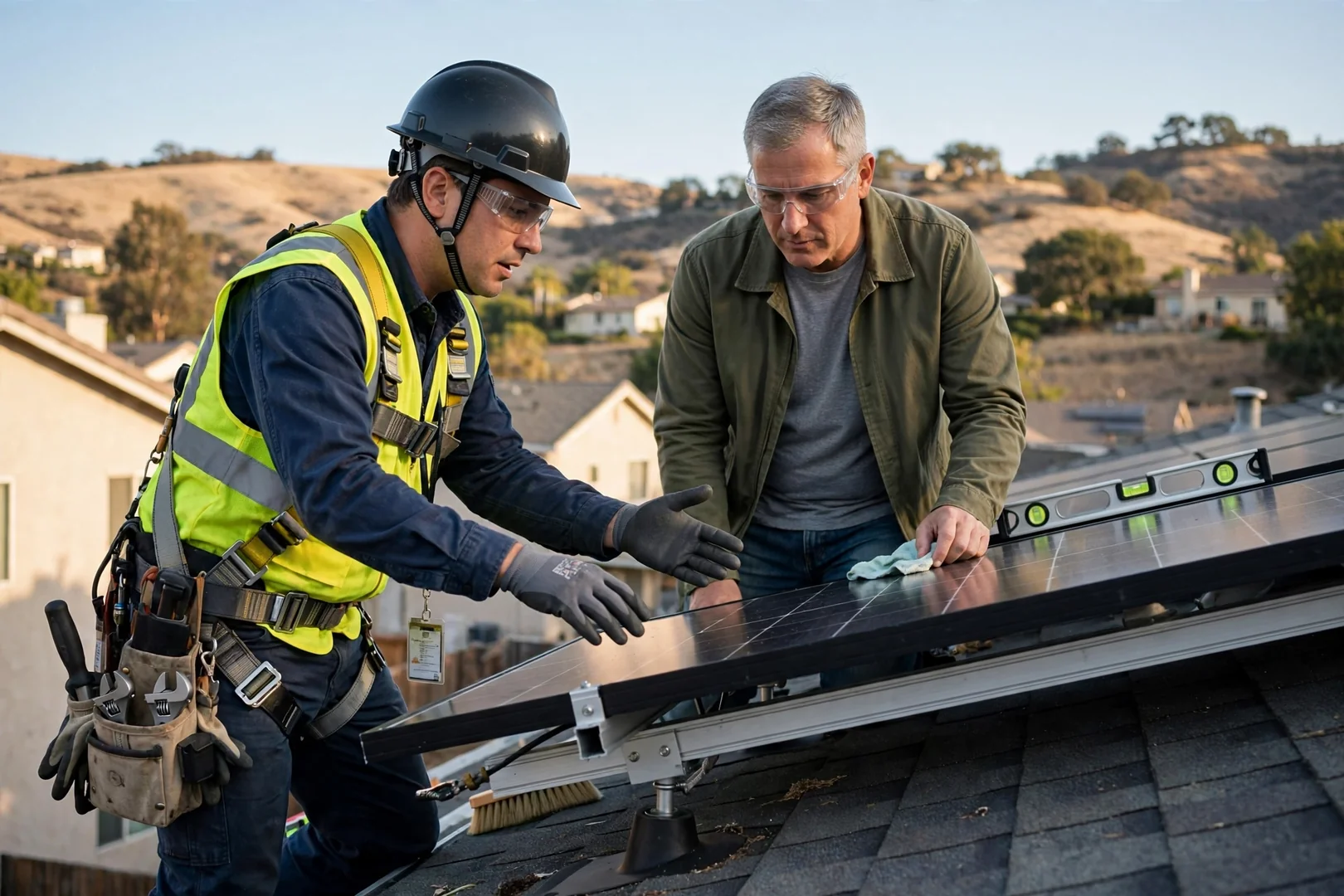
Careful solar work, explained clearly, is what Mountain House Solar Panel Installations stands for. Our trained technicians treat every roof plan, mounting point, and electrical connection as a safety decision first, protecting both people and property. Through 2026 we continue serving Mountain House homes and businesses. Read on to learn how we work.
Request a Written Estimate (209) 684-7590Talk With Our Solar Team
Share a few details about your Mountain House property and we will follow up to discuss panels, inverters, batteries, or a site inspection.
Our Background
Background of Mountain House Solar Panel Installations
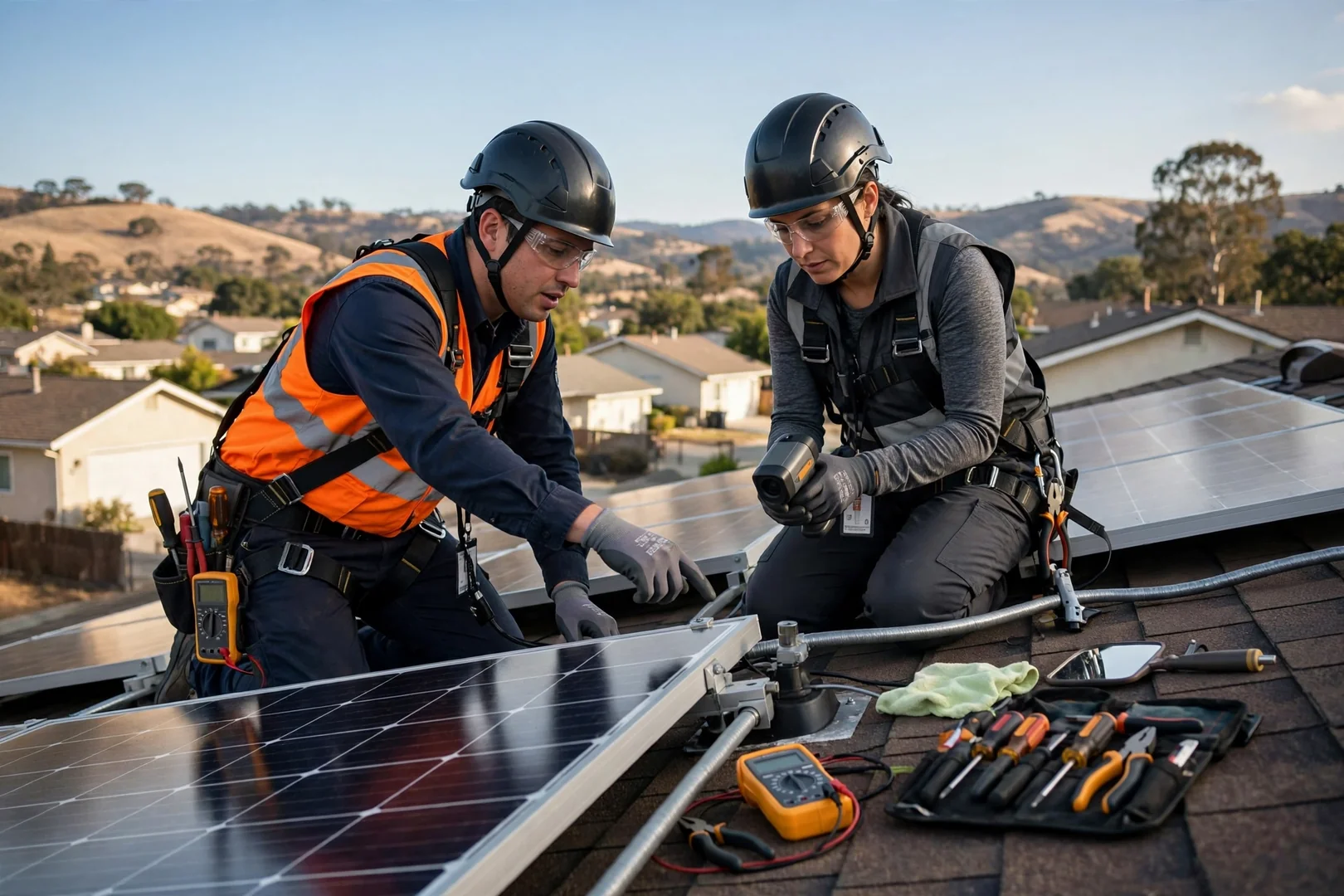
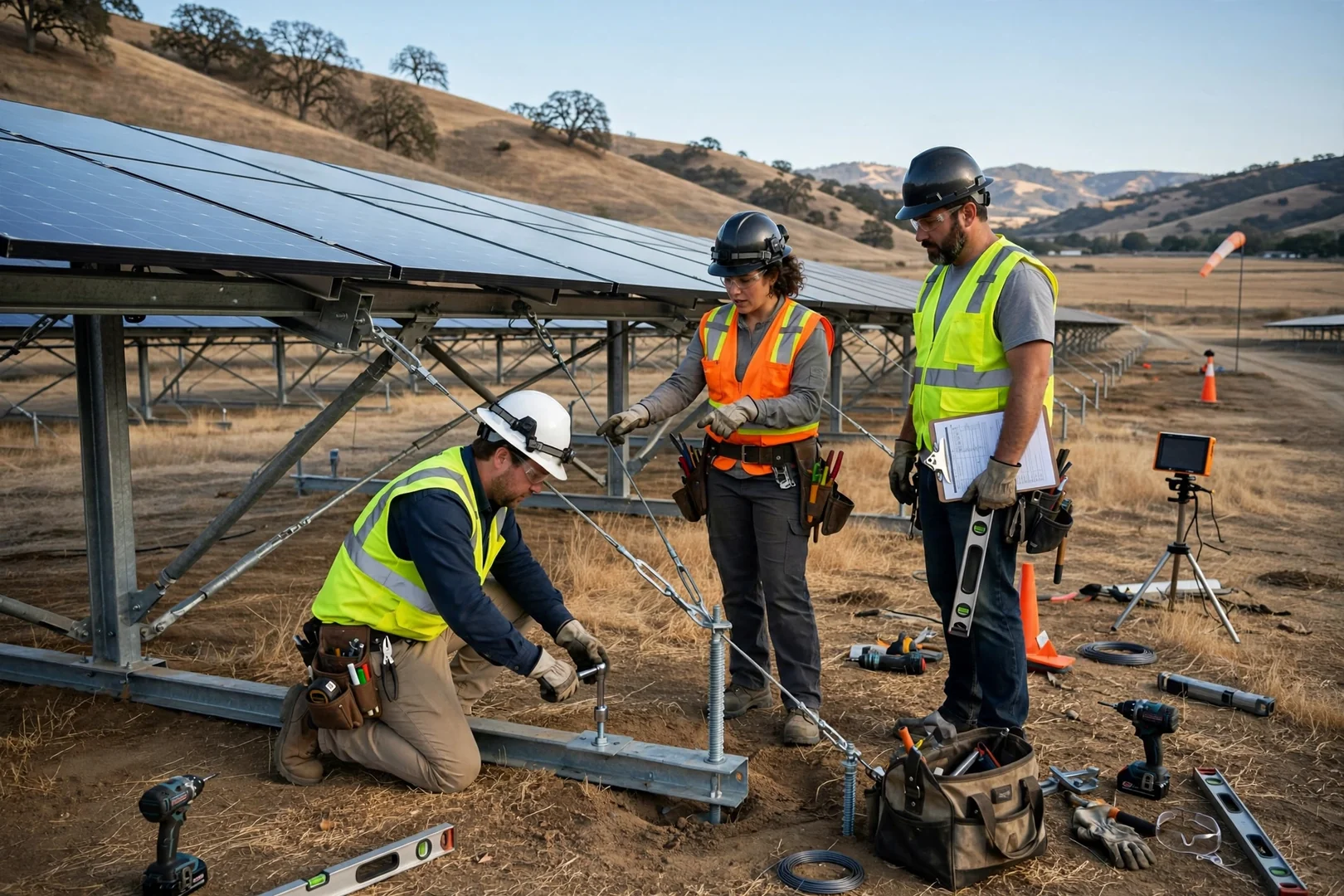
Built around residential and commercial photovoltaic work, this company focuses on the details homeowners rarely see: rafter locations, flashing at every roof penetration, conductor sizing, and inverter placement that keeps heat away from living space. Mountain House rooftops vary widely, from newer tile and composition shingle homes to light commercial buildings with flat membrane roofs, so array layout and racking choices change from one address to the next. Some properties suit a string inverter, while others perform better with microinverters or a hybrid system paired with battery storage. Ground-mounted arrays bring their own considerations, including trenching depth, frost-free footings, and conduit routing.
Our safety-first approach was not written by a marketing team. It came from years of hands-on installs where fall protection, lockout procedures, and rapid shutdown compliance decided whether a job went smoothly or created hazards. Every project starts with a site inspection and a written estimate, and ends with a post-job walkthrough so the homeowner understands the monitoring app, the disconnect location, and the maintenance schedule. Heading into 2026, Mountain House clients continue to ask thoughtful questions about production, warranties, and roof condition, and we would rather answer them before equipment arrives than after.
Hands-On Solar Experience
What Experience Do We Bring to Mountain House Properties?
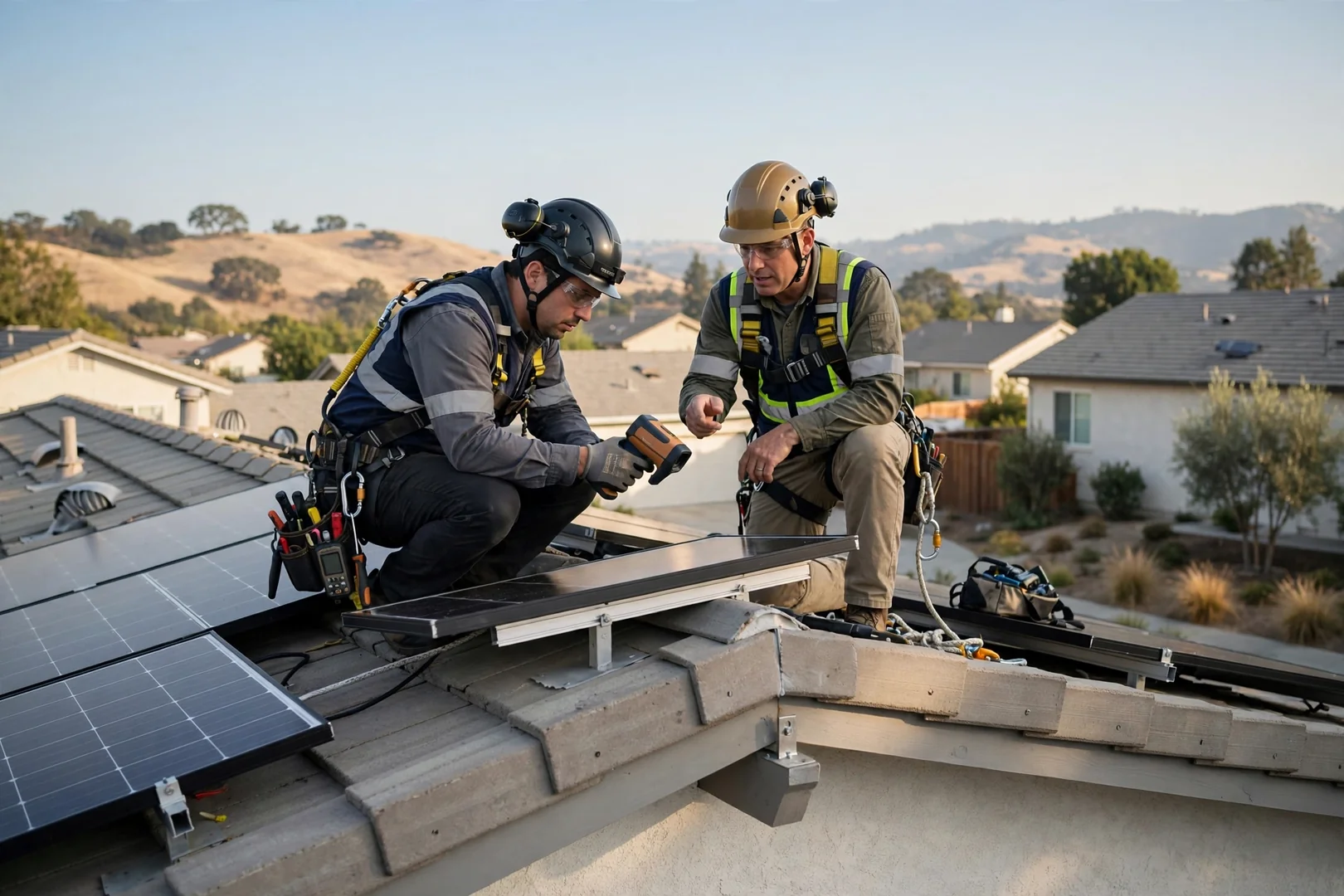
Our team brings extensive field experience across residential rooftops, ground mounts, and light commercial photovoltaic systems throughout Mountain House and the surrounding Central Valley. That experience covers array design and shade analysis, racking attachment into structural framing, conduit runs, inverter commissioning, and battery interconnection under current electrical code.
Valley conditions shape how systems are built here. Summer heat affects module temperature coefficients and inverter efficiency, dust and pollen reduce production if panels go unwashed, and winter tule fog changes seasonal output expectations. Knowing those patterns helps set realistic production estimates instead of optimistic guesses.
Technique keeps evolving. Rapid shutdown requirements, module-level electronics, and higher-capacity lithium storage have all changed how installations are planned and inspected compared with earlier generations of equipment. In 2026, most of our Mountain House work involves either new construction-era homes with limited attic access or older arrays needing inverter replacement, panel repair, or a full system evaluation. Every visit follows the same sequence: inspect, document, explain, then install or repair with proper fall protection and de-energized circuits.
Schedule a Site Inspection (209) 684-7590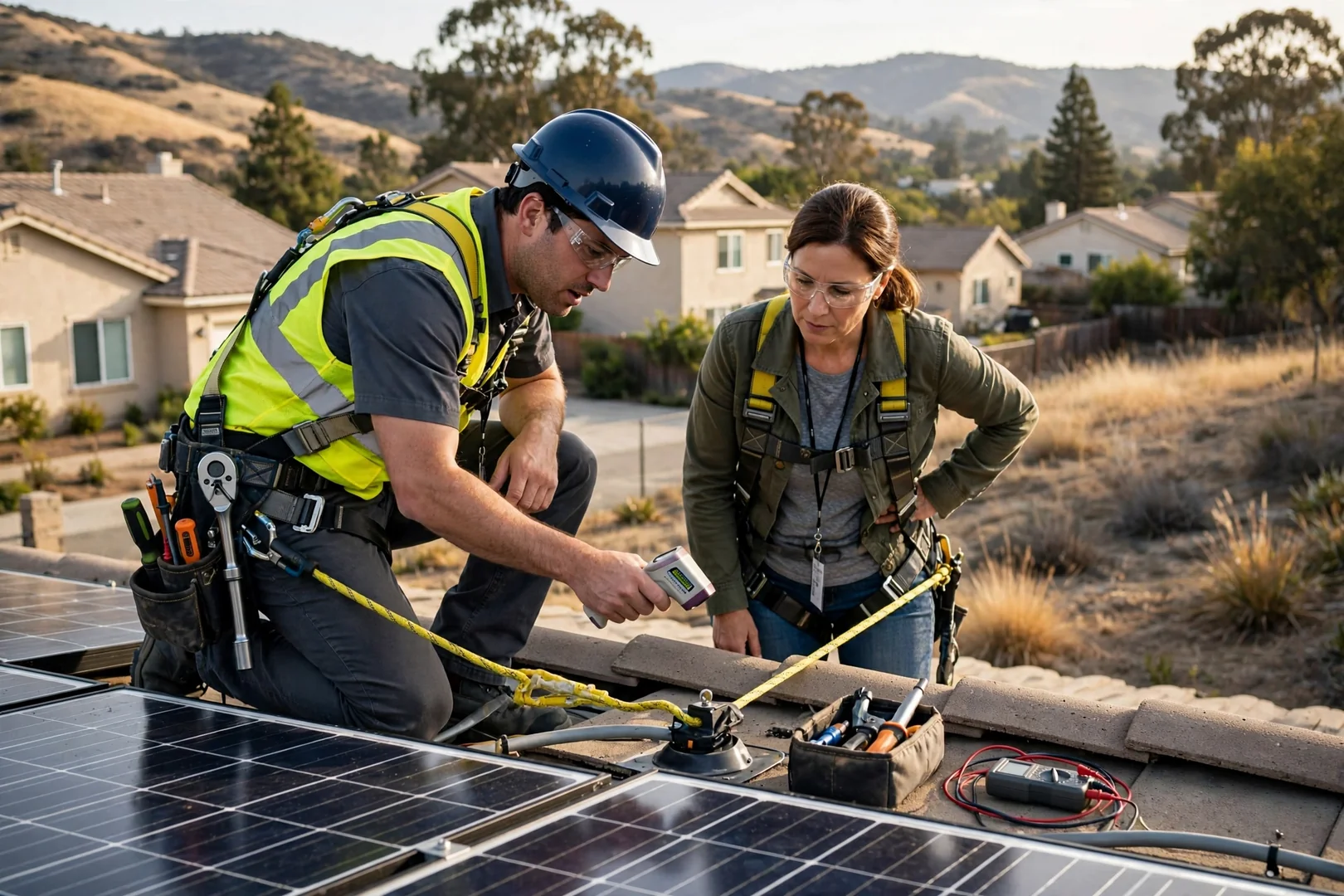
Safe Solar Practices
What Standards Guide Our Solar Work?
Every rooftop visit in Mountain House begins with a documented site assessment that records roof pitch, rafter spacing, attic access, and the condition of existing conduit runs before a single mounting bracket is set. Crews wear fall-protection harnesses tied to rated anchor points, and array strings are de-energized and voltage-verified with a meter before any junction box or rapid shutdown device is opened. Torque values on lag bolts and rail clamps get checked against manufacturer specifications, then logged so homeowners can see exactly how their racking was fastened. Nothing is guessed.
Wiring methods, conductor sizing, grounding, and labeling all follow the electrical code edition adopted for permitting in 2026, and inspection paperwork is prepared alongside the interconnection application rather than after the fact. Ladders, extension cords, insulated hand tools, and testing meters are inspected at the start of each job and pulled from service if anything looks worn. Panels, packaging, and old equipment leave with our trucks, and every project closes with a written summary and a walkthrough of the inverter display so the system is understood, not just installed.
Ask About Our Process (209) 684-7590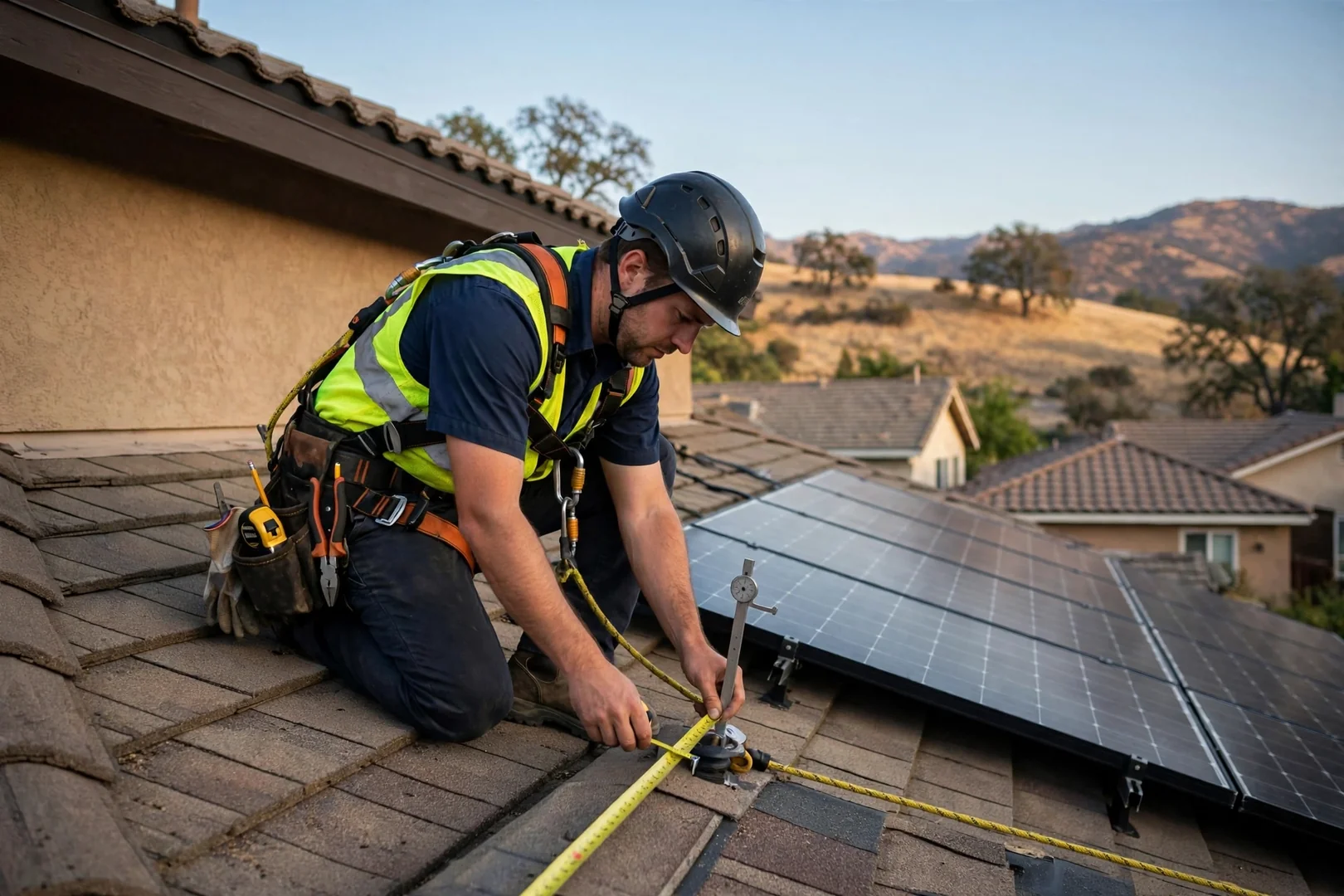
How Are We Equipped for Mountain House Properties?
Housing across Mountain House leans toward newer tract-built homes with composition shingle roofs, tight side yards, and main service panels rated for modern loads, which shapes how arrays get laid out and where conduit can safely run. Summer heat in the Central Valley pushes rooftop temperatures well past ambient, so module temperature coefficients, rail expansion gaps, and inverter ventilation clearances all factor into the design. Winter tule fog and delta wind from the west affect production expectations and mounting hardware selection on open, ground-mounted sites. Shade patterns matter too.
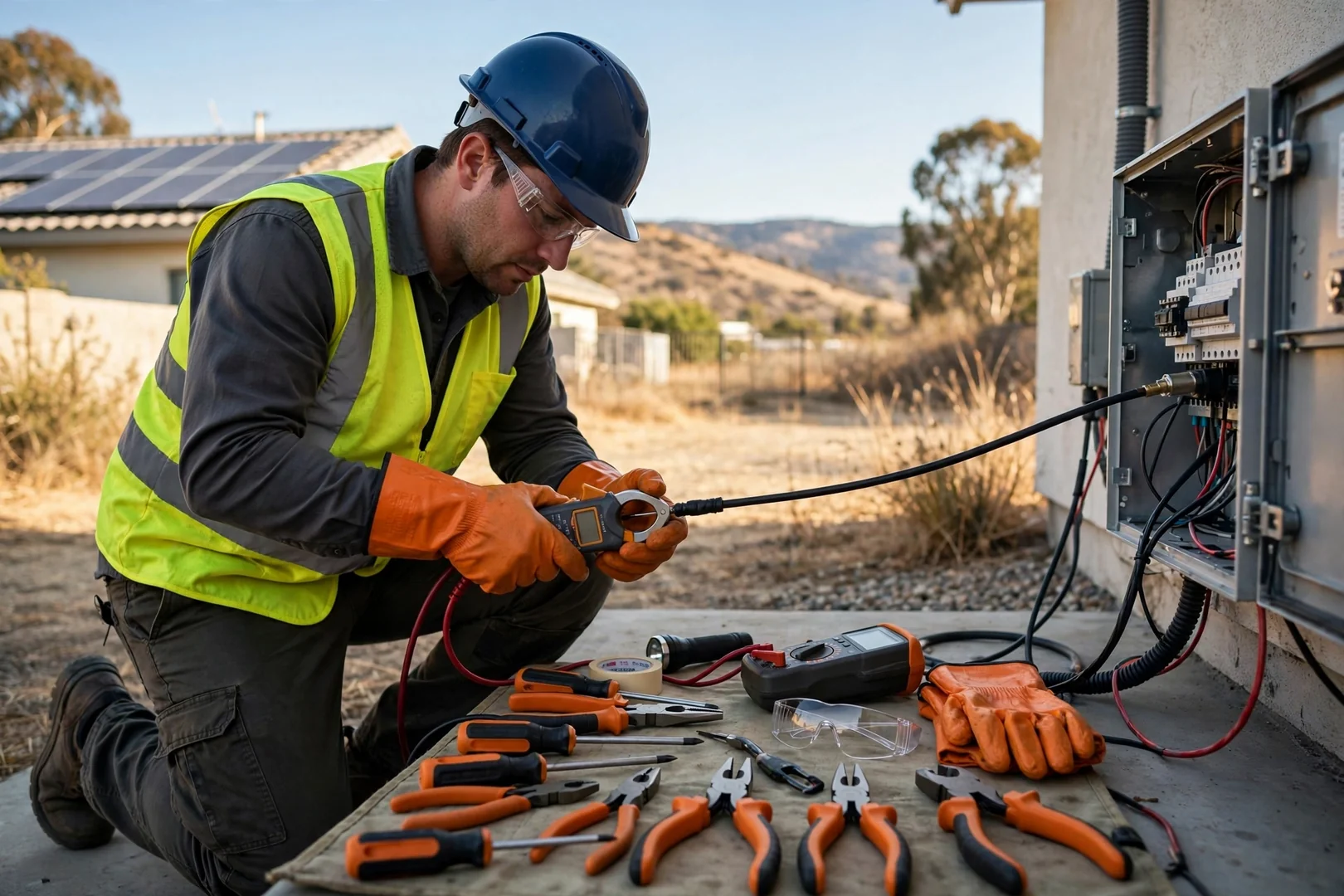
For that reason, site visits rely on irradiance and shade-path readings, insulated multimeters, clamp meters for string current checks, infrared scanning for hot cells or loose terminations, and torque wrenches calibrated for racking hardware. Ladders, harnesses, and anchor straps are inspected before each Mountain House job, and any gear showing wear gets replaced rather than used one more time. Trained technicians handle module lifting in pairs to avoid microcracks and back strain, especially on windy afternoons. Through 2026 our checklists continue to be updated as permitting expectations and equipment specifications shift, keeping inspections and repairs across Mountain House consistent from one roof to the next.
How We Work
How Do We Approach Every Solar Job?
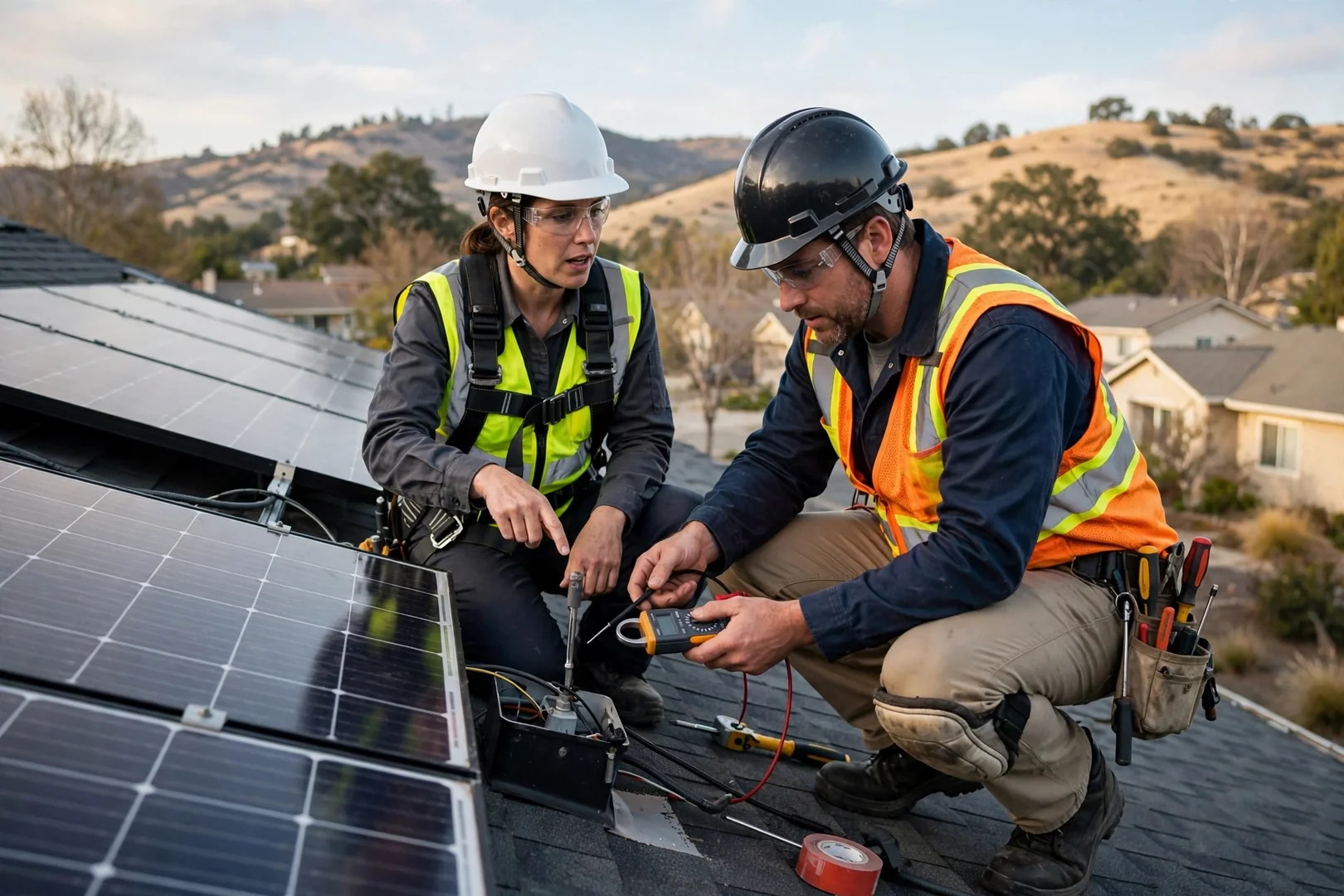
We approach every solar job by inspecting the property first, explaining what we find in plain language, and only then recommending a scope that matches the roof, the electrical service, and the household’s energy use. Before quoting a residential or commercial array, technicians check rafter condition, flashing points, attic moisture signs, and available panel busbar capacity, because a system is only as sound as the structure carrying it. Homeowners in Mountain House receive a written estimate that separates modules, racking, inverter or battery equipment, and permitting so nothing is buried in a single number. During installation, penetrations are sealed with flashed mounts, string wiring is routed clear of walkways and drip edges, and the array stays de-energized until commissioning steps are verified in sequence. Work areas are swept and checked with a magnet sweep for dropped hardware. After startup, we walk through monitoring access, rapid shutdown location, and maintenance intervals, and follow-up production checks scheduled through 2026 help catch shading changes, soiling buildup, or a failing string early rather than months later.
Schedule a Site AssessmentCustomer Commitment
What Can Mountain House Customers Expect From Us?
Every project begins with a written estimate that lists panel counts, inverter specifications, mounting hardware, and any electrical upgrades your service panel may need, so nothing arrives as a surprise later. Our trained technicians show up when scheduled, protect walkways and landscaping before ladders go up, and follow tie-off and lockout procedures whenever they work on a roof or open a combiner box. Throughout 2026 we continue documenting each installation with photographs of racking attachments, flashing, conduit runs, and final torque checks, then share them during a post-job walkthrough. Pricing stays transparent, and if an inspection reveals rafter damage or worn wiring, we explain the finding and the options before any additional work moves forward. That is the quiet part of the job that matters most.
Safety guides the sequence of the work rather than sitting apart from it. Before a single module is mounted, we assess roof structure, penetration points, shading patterns, and grounding paths, because a system that is electrically sound and structurally supported is the one that lasts through Mountain House summers and Delta wind. Crews de-energize circuits properly, verify polarity, and confirm rapid shutdown function so first responders and future service visits stay low risk. Small details prevent large problems.
After commissioning, homeowners receive a plain-language explanation of monitoring, production expectations, and what routine solar repair and maintenance visits look like over the years ahead. We answer follow-up calls, return for warranty questions, and keep records of each system we install across Mountain House neighborhoods so future troubleshooting starts with real history instead of guesswork. Respect for your property continues after the trucks pull away, including cleanup, debris removal, and a final check that attic spaces and roof surfaces were left sealed and sound.
Request a Written Estimate (209) 684-7590