Ground-Mounted Solar Installation in Mountain House, CA

Ground-mounted solar installation places your panel array on engineered racking anchored into the soil rather than on your roof, making it a practical option for Mountain House households with open side yards, larger lots, newer tile roofs they would rather not penetrate, or shaded rooflines. Many properties around Mountain House sit on flat, open parcels with strong afternoon sun and steady Delta breeze, conditions that suit a fixed-tilt or adjustable-tilt frame set at a calculated azimuth for year-round production. Our crew handles soil evaluation, foundation depth planning, ballasted or driven-pier footings, trenched conduit runs, and grounding before a single module goes up. Scheduling for 2026 installations is open now, and early-season bookings help crews complete groundwork and inspections before summer heat limits safe working hours. Every step follows documented safety procedures, with trained technicians verifying structural anchoring and electrical isolation. Mountain House Solar Panel Installations manages the full build from layout staking to final commissioning.

Request a Site Assessment (209) 684-7590

Ask About Ground-Mount Solar

Share a few details about your lot and power goals, and our team will follow up with next steps and a written estimate.

Ground-Mount Solar Service Overview

What Our Ground-Mounted Solar Installation Service Includes

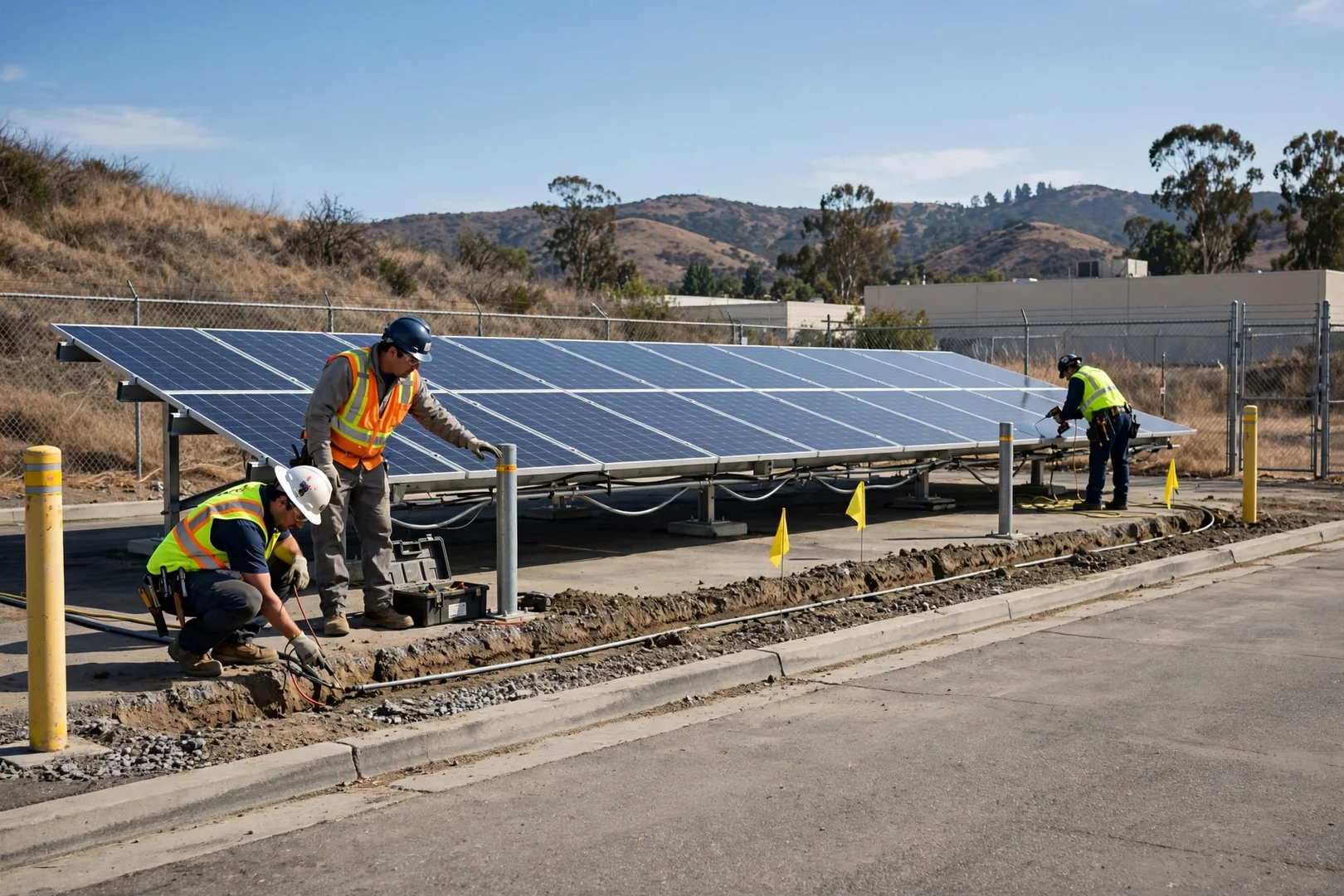
Ground-mounted solar installation is the process of building a freestanding solar array on a foundation set into the ground, and at Mountain House Solar Panel Installations it includes soil assessment, footing design, racking assembly, module mounting, conduit trenching, inverter tie-in, and utility interconnection across Mountain House properties. Work begins with a site walk where technicians check setbacks, drainage patterns, irrigation lines, and shading from fences or trees, then stake the array footprint and confirm tilt and azimuth for the best seasonal yield. Footings are installed as driven piers, concrete piers, or ballasted bases depending on soil compaction and frost depth, and torque values on every rail clamp are verified during assembly. Trenched runs carry DC conductors in rated conduit to the inverter and disconnect, with bonding and grounding electrodes tested before energizing.

Residential lots, farm parcels, multi-unit properties, and commercial yards each call for different array sizing and access planning, so layouts are drawn with equipment paths, maintenance clearance, and mowing or livestock protection in mind. Safety guides the sequence. Trained technicians follow lockout procedures, use spotters during panel lifts, and keep trenches marked and barricaded until backfill is complete, which reduces both injury risk and damage to landscaping or buried utilities. Our 2026 approach puts more attention on pre-dig utility locates and post-installation torque re-checks, plus a walkthrough where we explain monitoring, string performance, and cleaning intervals in plain language before we leave the site.

Talk With Our Solar Team (209) 684-7590

How Much Does Ground-Mounted Solar Installation Cost in Mountain House?

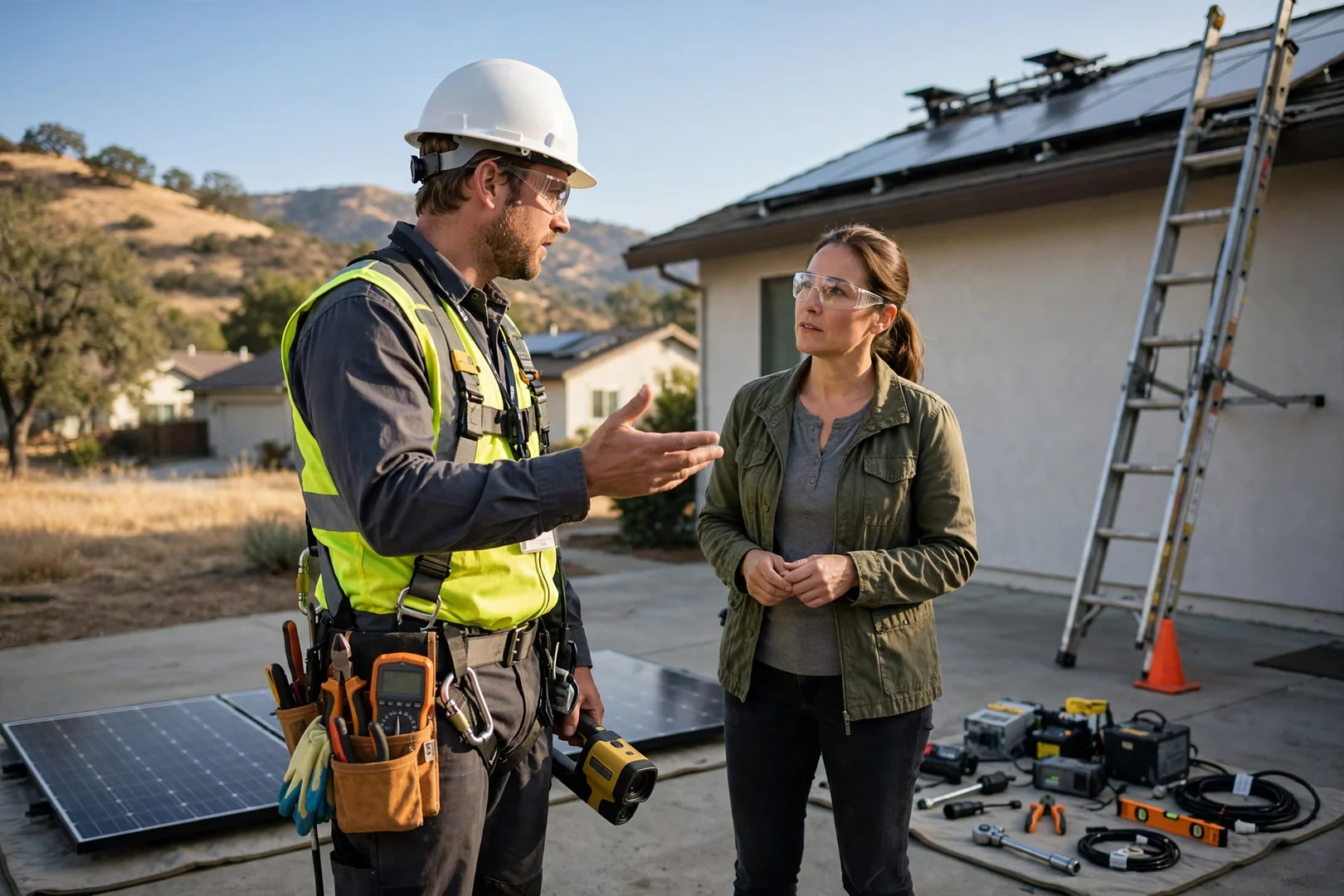
Ground-mounted solar installation pricing in Mountain House depends primarily on array size in kilowatts, foundation type required by your soil conditions, trenching distance from the array to the main service panel, and inverter configuration, with most 2026 projects landing inside typical ranges for the region once those variables are known. Larger arrays need more racking steel and more piers, which raises both material and labor hours. Soil that is dense clay or rocky may require concrete piers or a ballasted base instead of driven posts, and that choice shifts the foundation line item noticeably. Distance matters more than many homeowners expect. A panel array sitting two hundred feet from the house needs longer conductor runs, heavier wire gauge to limit voltage drop, and more trench footage, all of which add cost. Other factors include string inverter versus microinverter selection, whether a service panel upgrade is needed to support the new circuit, permitting and inspection fees in San Joaquin County, and any battery or monitoring hardware added at the same time. Because every Mountain House lot has different grading, drainage, and setback conditions, an accurate number requires an on-site assessment rather than a phone quote. Technicians measure the run, check for buried irrigation and utility lines, and confirm the safest equipment access route before pricing the foundation work. We provide free written estimates that itemize equipment, foundation, trenching, and electrical labor, so you can see exactly what each portion of the project covers before any work begins.

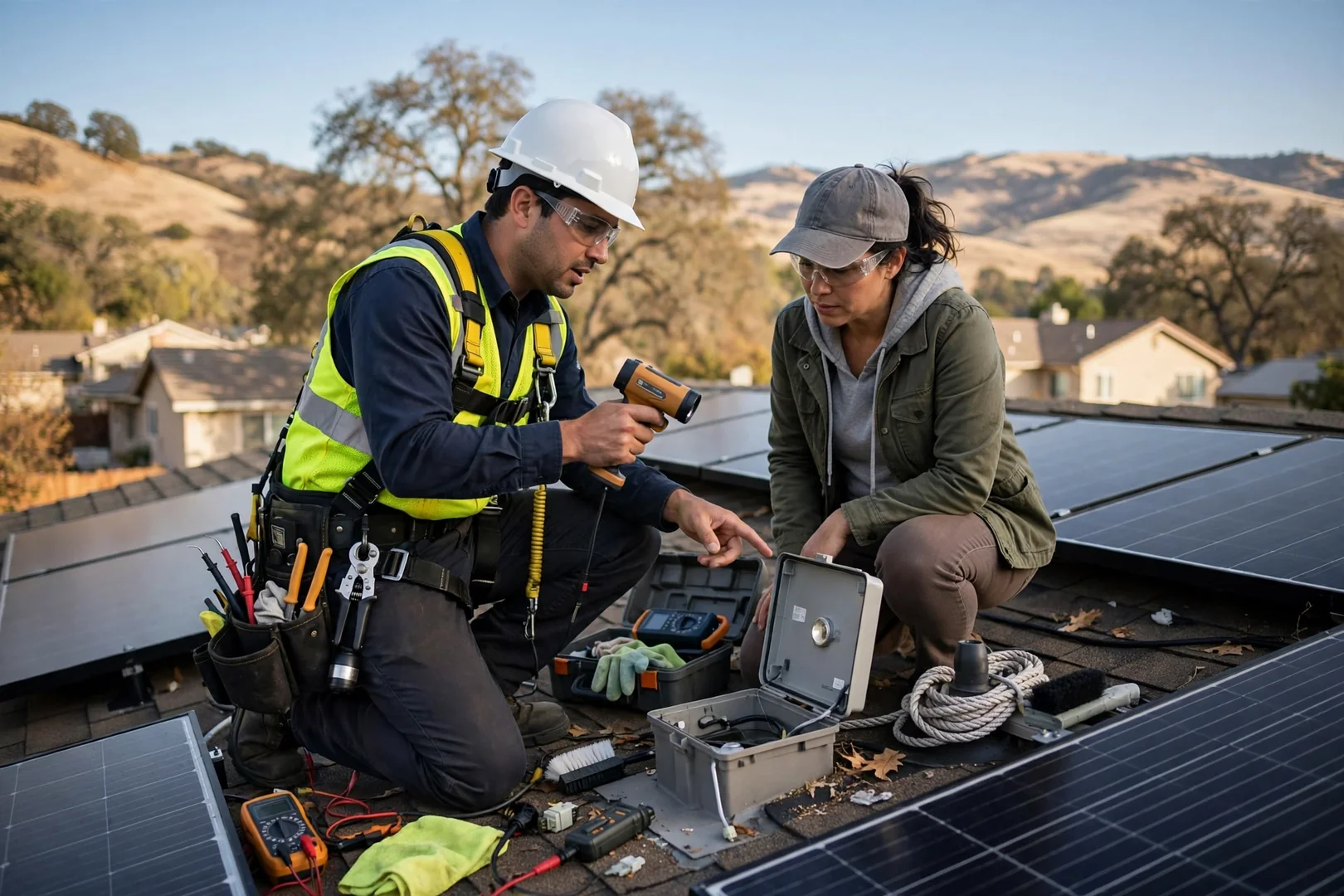
Solar professional reviewing a written ground-mount array estimate with homeowners at a Mountain House property

- Common Ground-Mount Solar Signs -

What Signs Mean Your Property Needs Ground-Mounted Solar Installation?

Ground-mounted arrays make sense when a roof cannot host a safe, productive system. Watch for heavy tree shading, aging composition shingles, a poor azimuth, or inverter clipping on hot afternoons. Roof space runs short fast. Many Mountain House homeowners with open side yards solve all four in 2026 using pier-set racking.

Click Me to Call: (209) 684-7590

Roof Space or Shading Limits Production

Mature trees, dormers, and vent stacks break up usable roof planes, forcing panels into shaded or east-facing sections. A ground array lets the racking be aimed at true south with proper tilt, so summer heat and low winter sun angles both stay accounted for.

Aging Roof Covering or Structural Concerns

Drilling standoffs into worn composition shingles or thin sheathing invites flashing leaks and load questions. Moving the array to grade keeps penetrations off the roof entirely, which protects the building envelope and avoids removal costs when reroofing time arrives.

System Too Large for the Available Roof

Homes adding heat pumps, EV chargers, or battery storage often outgrow their roof capacity. Ground-mounted racks scale by adding rows and rails, letting string sizing, conductor runs, and inverter capacity match the actual load profile without crowding.

Ground-Mount Installation Process

How Do We Perform Ground-Mounted Solar Installation in Mountain House?

Book a Site Assessment (209) 684-7590
1

Site Assessment and Shade Study

Work begins on the ground, not on paper. A technician measures the open yard area, records sun angles across the day, and notes fences, wells, and trees that could shade lower panel rows. Soil type and grade are checked because they determine whether concrete piers or driven ground screws suit the site.

2

System Design and Written Estimate

Using the site data, the array layout is drawn with row spacing, tilt angle, and azimuth set for Mountain House conditions in 2026, including summer heat and valley haze. String sizing, inverter selection, and trench routing are documented. You receive a written estimate that lists equipment, labor, and permit scope before anything is ordered.

3

Permitting and Utility Coordination

Plans, structural details, and single-line diagrams go to the local building department, and the interconnection application goes to the utility. This paperwork stage protects you later. It confirms setbacks, grounding requirements, and code compliance so the inspection at the end is a formality rather than a surprise.

4

Foundation Work and Racking Assembly

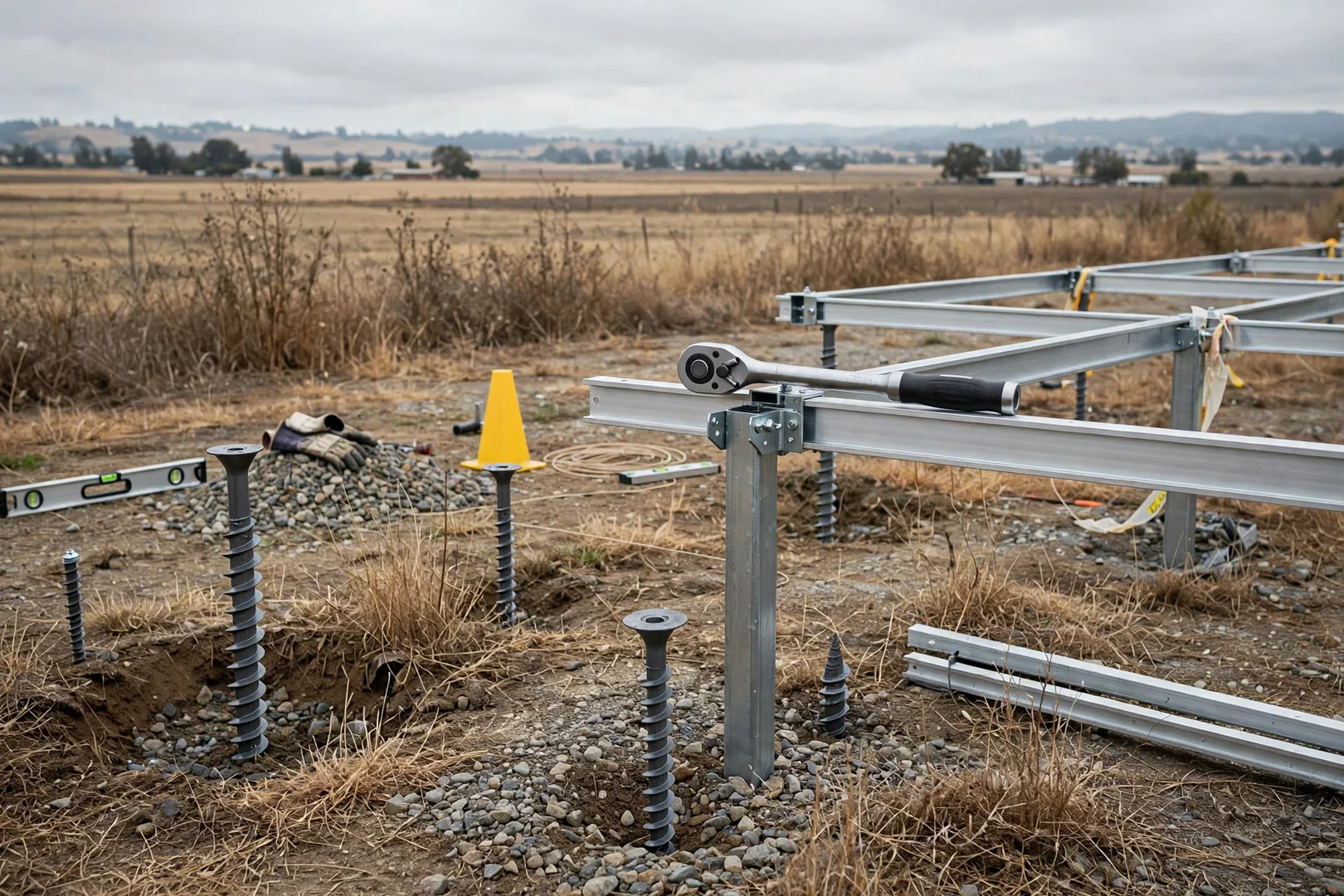
Before digging, utility locates and irrigation lines are marked to prevent strikes. Piers or ground screws are set to depth, checked for plumb, then rails are aligned and torqued to manufacturer specification. Trenching for conduit follows a planned path, and open excavations are covered or barricaded at the end of each work day.

5

Wiring, Commissioning, and Walkthrough

Modules are clamped and bonded, conductors pulled, and the DC and AC disconnects installed with the system de-energized until testing. Insulation resistance, polarity, and grounding continuity are verified before startup. After inspection and utility approval, a post-job walkthrough shows you the disconnects, monitoring app, and cleaning access.

/// Recent Ground-Mount Jobs ///

Ground-Mounted Solar Projects
Completed Across Mountain House

Ground-mount work across Mountain House in 2026 has spanned open backyard lots, rural parcels, and small commercial yards. Crews set concrete piers or driven ground screws, check soil conditions, then torque racking rails to specification.

Each array starts with a site walk that flags irrigation lines and buried utilities before any digging. Trained technicians handle conductor pulls, DC disconnects, and grounding with the array de-energized. Written estimates and a post-job walkthrough close out every job.

Call us on: (209) 684-7590

Why Do Mountain House Homeowners Trust Us for Ground-Mounted Solar Installation?

Call Us: (209) 684-7590
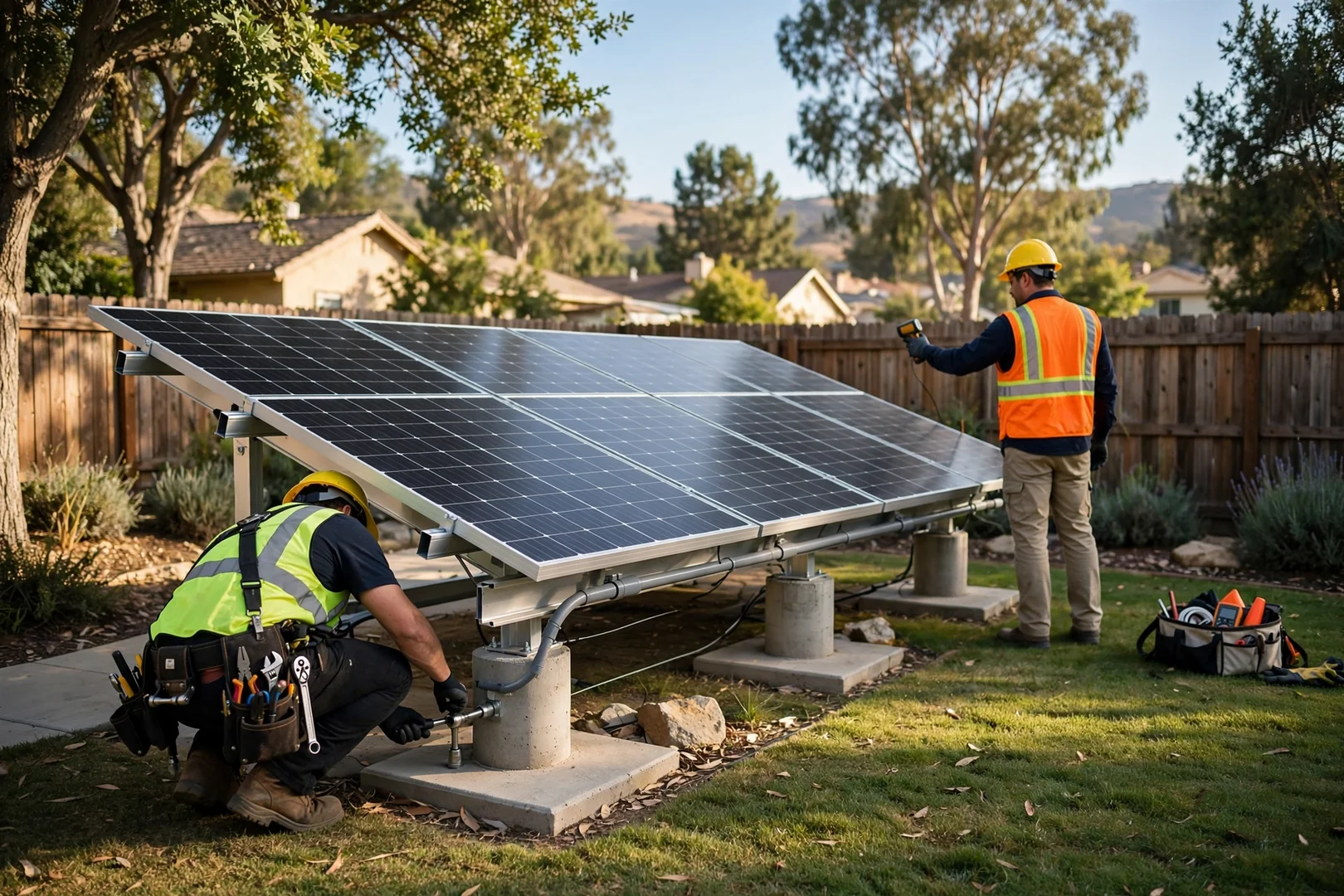
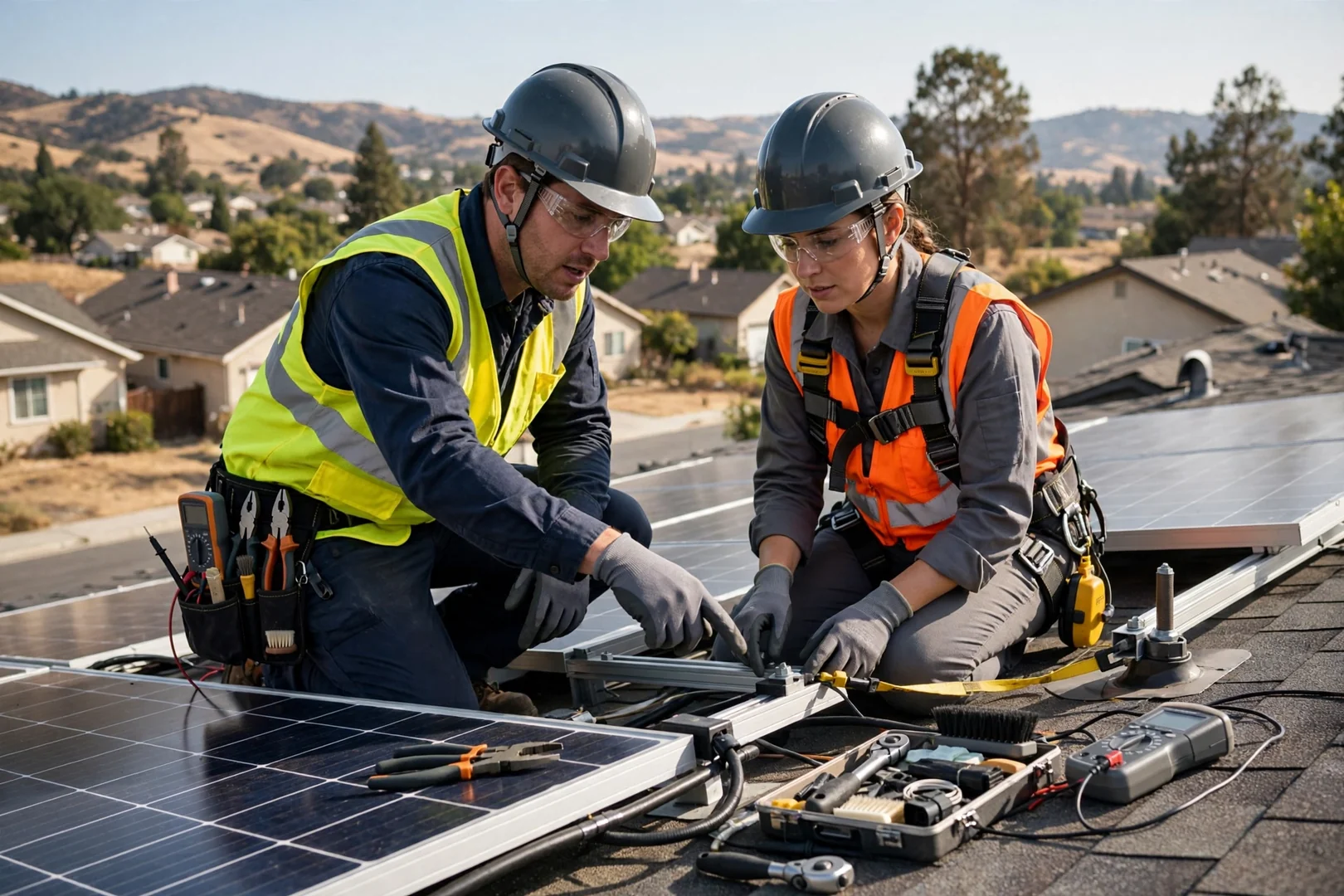
Technicians aligning ground-mounted solar array racking on a residential lot in Mountain House

Focused Ground-Mounted Solar Installation Advice. We match recommendations to your actual property conditions instead of using a one-size-fits-all package.

Clear Communication. You know what is being installed, why it matters, and how to maintain it after the visit.

Local Follow-Through. Our team supports homeowners and businesses in Mountain House, CA before, during, and after the job.

Ground-Mount Solar FAQs

Ground-Mounted Solar Installation FAQs for Mountain House Homeowners

Ground-mounted systems raise different questions than rooftop arrays, since they involve soil work, trenching, and open-yard placement. The answers below cover the topics Mountain House property owners ask about most during 2026 planning conversations, from scheduling and site preparation to what the finished array requires long term.

If your situation involves unusual grading, well equipment, or a large parcel, a site visit gives clearer answers than general guidance. Our team can walk the property with you and explain the options in plain terms.

Ask Us About Your Property

A ground-mounted array typically needs an open area several times the module footprint to allow for row spacing, tilt angle shading, and safe access on all sides for maintenance. During the site study we measure sun paths, setback requirements, and clearance from septic fields, wells, and property lines before proposing a layout. Sloped or irregular parcels around Mountain House often still work well once pier heights are adjusted.

Installation begins with utility locates and soil evaluation, followed by pier or footing placement, racking assembly, module mounting, trenching for conduit, and electrical termination at the inverter and main service panel. Permitting and utility interconnection paperwork run alongside the physical work, and inspection sign-off comes before the system is energized. Each stage includes photo documentation, including footing depth and bonding points recorded before backfill.

Scheduling depends on permit review, utility interconnection timelines, and equipment lead times, so we confirm a target window in writing once your plan set is submitted. Field work on a residential ground mount is generally shorter than the approval process, with foundation curing or pile setting driving part of the timeline. We keep you updated at each milestone rather than leaving gaps between visits.

Ground-mounted installations carry added cost because they require foundations, standalone racking structures, trenching, and longer conductor runs back to the service panel. Those elements are priced individually in a written estimate, so you can see how soil conditions, trench distance, and array size affect the total. Many owners accept the difference for better tilt and azimuth control plus easier cleaning and service access.

Mountain House conditions bring strong afternoon winds, hot dry summers, dust accumulation, and periodic winter ground saturation, all of which factor into foundation design and module clamp torque specifications. Wind load calculations guide pier depth and bracing, while low array height means dust and grass shading need occasional attention. In 2026 we continue recommending annual inspections that check pier stability, wire management, and vegetation clearance around the array perimeter.

Free Ground-Mount Solar Estimates

Schedule Ground-Mounted Solar Installation in Mountain House

Planning a ground-mounted array starts with a site visit, where a trained technician checks soil conditions, shading from nearby structures, setback requirements, and the best trenching route for conduit back to your main service panel. You receive a free written estimate that spells out racking type, foundation method, inverter placement, and permitting steps, so nothing is left to guesswork. There is no obligation to move forward.

Mountain House homeowners booking in 2026 can expect straightforward scheduling, clear timelines, and a post-job walkthrough that covers safe operation, disconnect locations, and simple monitoring habits. Our crews follow grounding, torque, and fall-protection standards on every foundation and rack assembly to protect your property and the people working on it. Call or email today to reserve your ground-mount site assessment.

Request Your Free Estimate (209) 684-7590
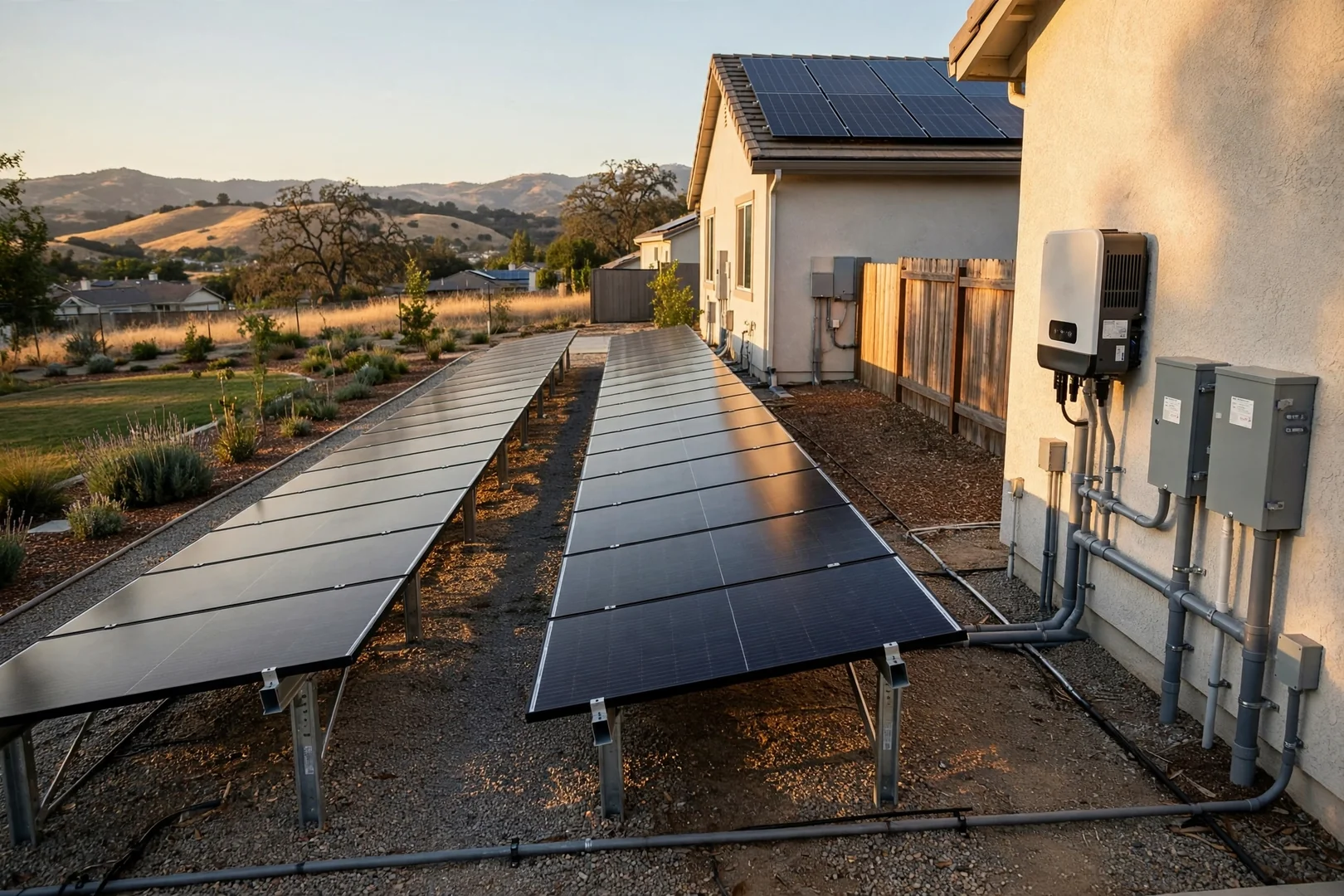
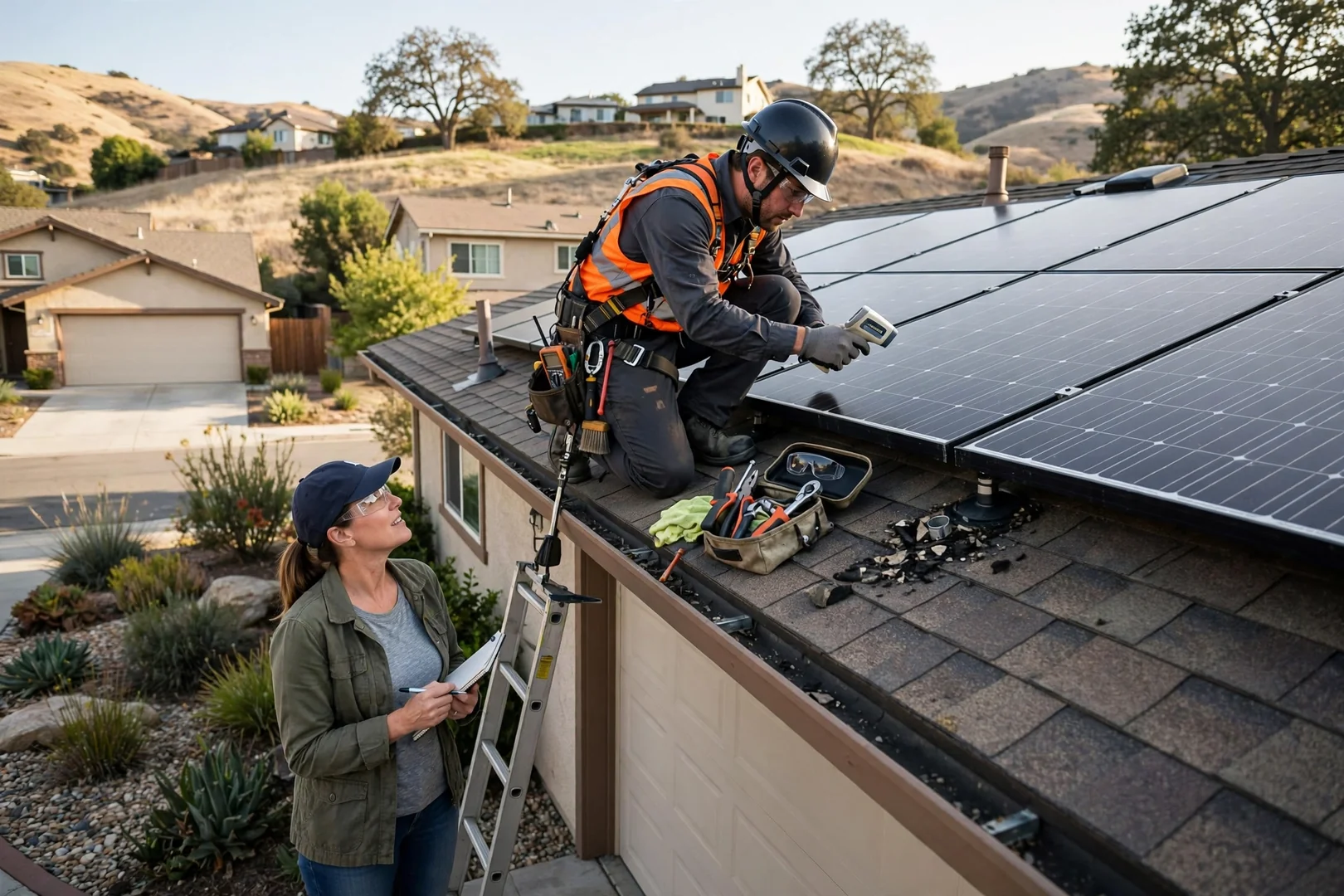
Technician reviewing ground-mounted solar array layout on a Mountain House property
Call Us: (209) 684-7590