Solar Inverter Installation and Replacement in Mountain House, CA

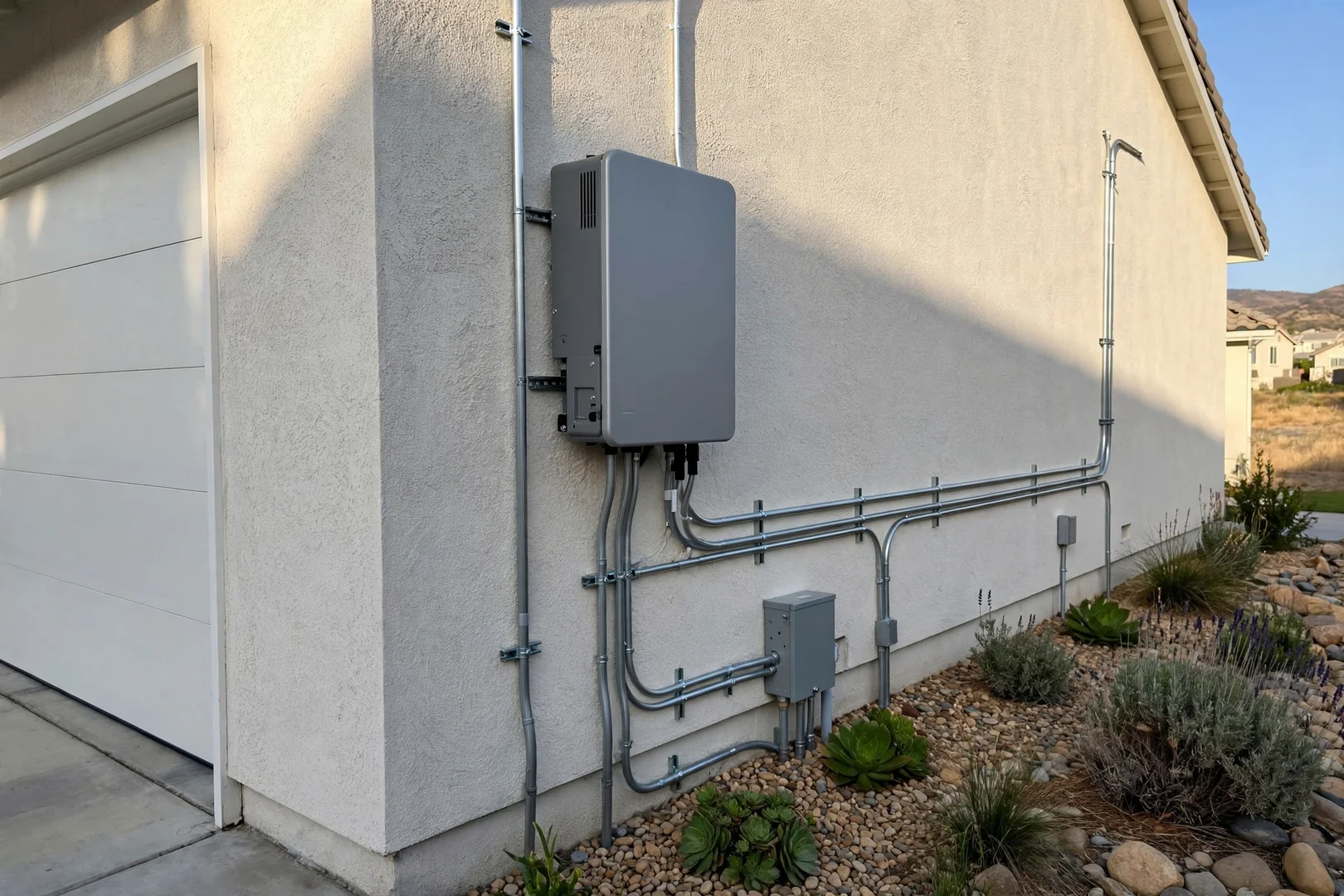
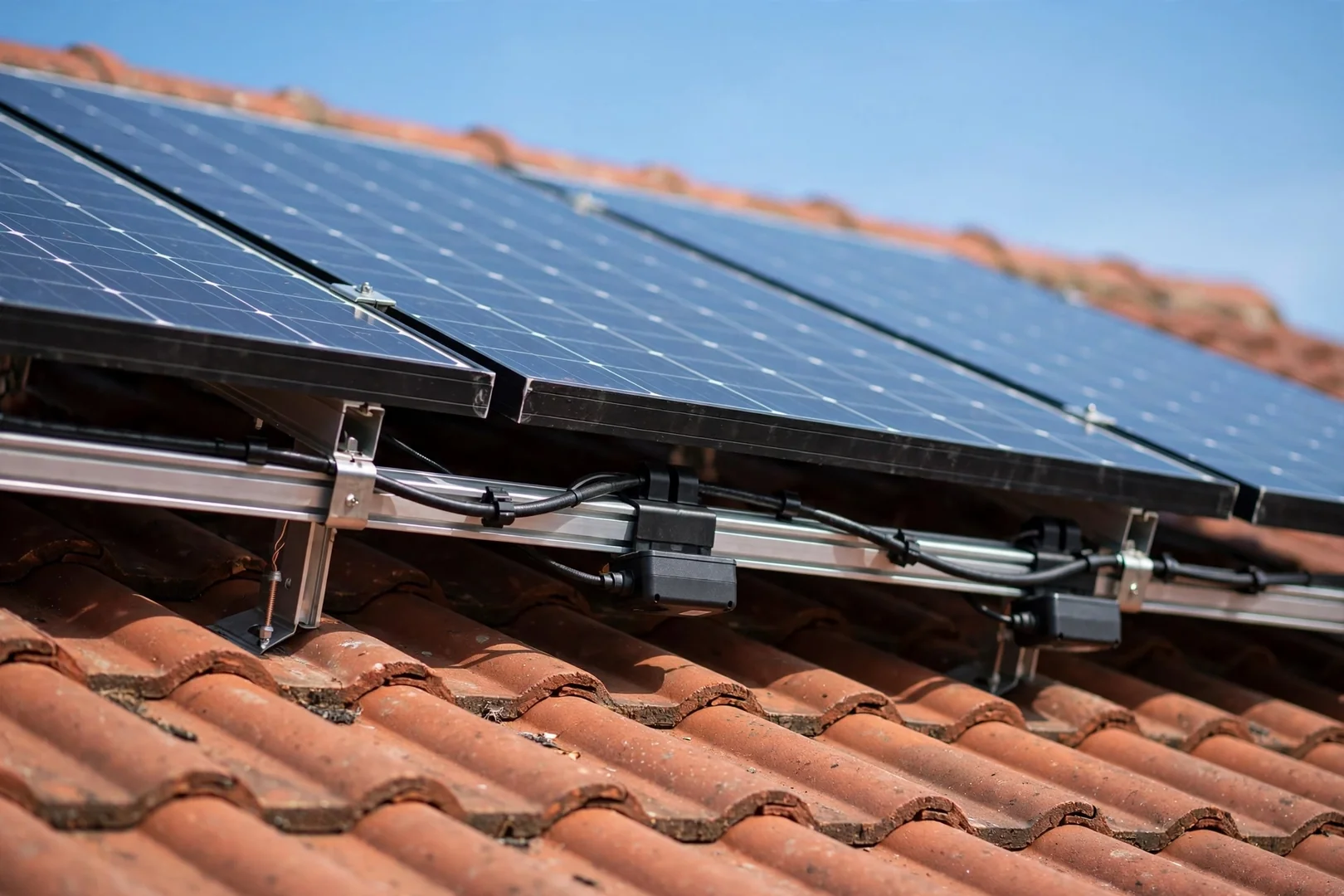
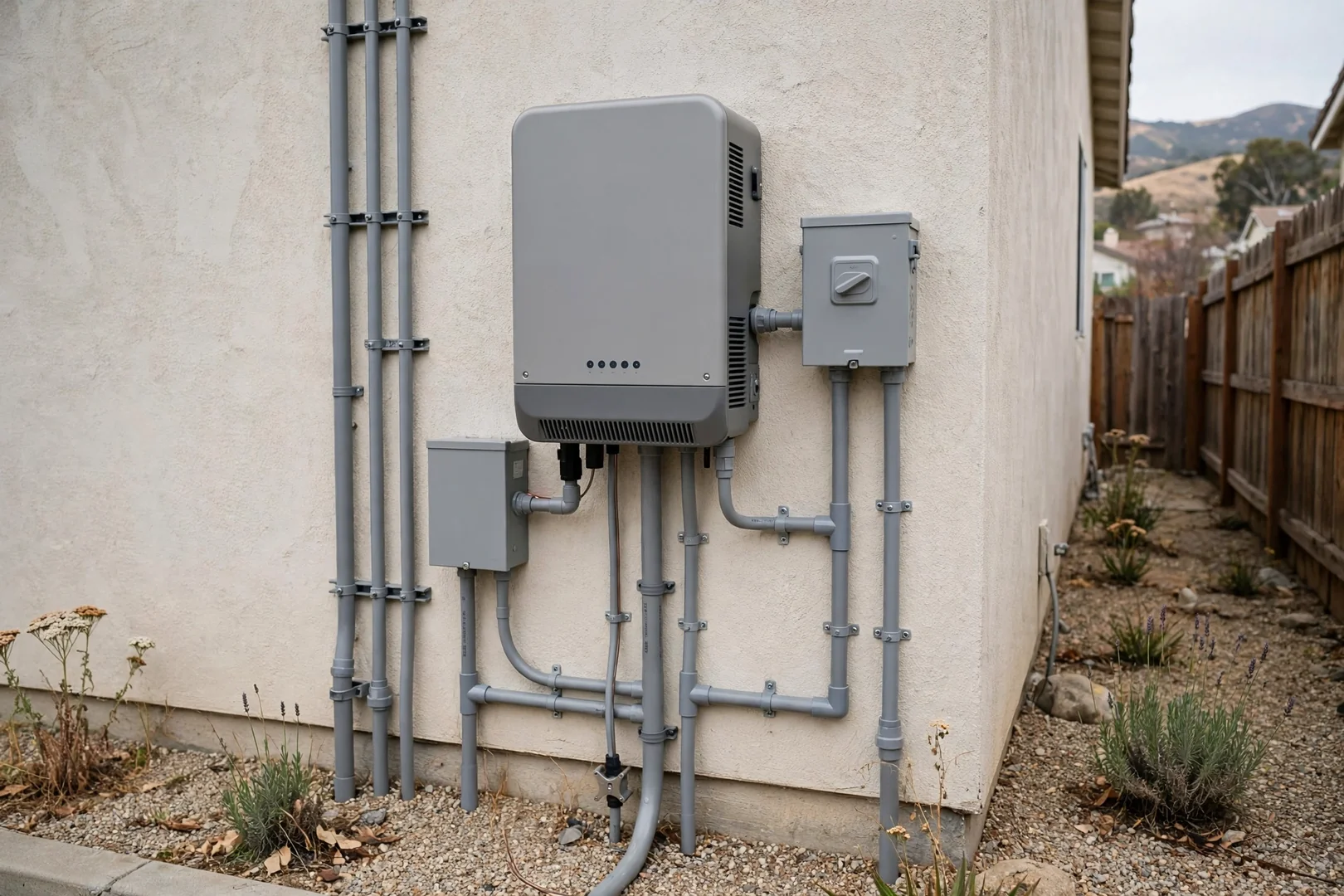
Solar inverter installation and replacement covers the swap or first-time setup of the component that converts DC power from your panels into usable AC electricity for the house. Homeowners in Mountain House usually need this work once a string inverter reaches the end of its service life, or when a newer tract home with a rooftop array starts logging repeated fault codes and reduced production. Long summer heat waves in the Central Valley put real strain on inverter electronics mounted on garage walls and sun-facing exteriors, which is why placement and ventilation matter as much as the unit itself. Our team schedules inverter evaluations and replacements throughout 2026, including microinverter conversions and rapid-shutdown compliance checks. Every job starts with a de-energized system and a documented inspection. Mountain House Solar Panel Installations handles the disconnect work, mounting, conduit, and utility coordination so your array comes back online safely.

Request an Inverter Assessment (209) 684-7590

Book Your Inverter Evaluation

Share a few details about your system and a technician will follow up with next steps and a written estimate for your Mountain House property.

Inverter Service Overview

What Our Solar Inverter Installation and Replacement Service Includes

Solar inverter installation and replacement is the process of mounting, wiring, and commissioning the device that converts panel DC output into household AC power, and at Mountain House Solar Panel Installations it includes load-side assessment, disconnect and conduit work, monitoring setup, and utility interconnection paperwork across Mountain House properties. Work begins with the array de-energized at the AC disconnect and DC isolators, followed by insulation and voltage verification before any enclosure is opened. Technicians then confirm whether a string inverter, hybrid unit, or microinverter layout suits the roof plane, shading pattern, and future battery plans. Torque specs, grounding continuity, and rapid-shutdown function are checked and recorded, not assumed. Short pause, careful test, then power up.

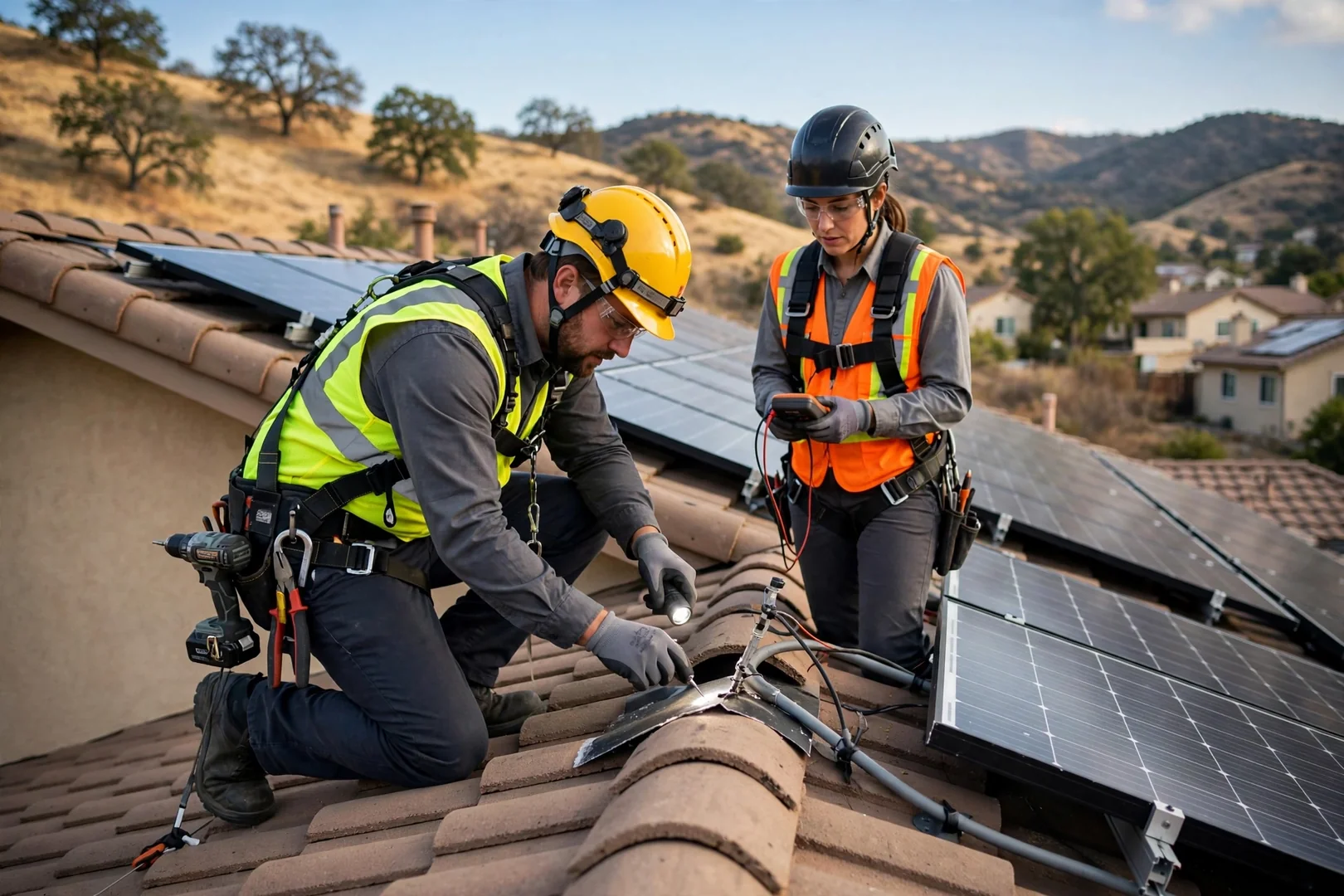
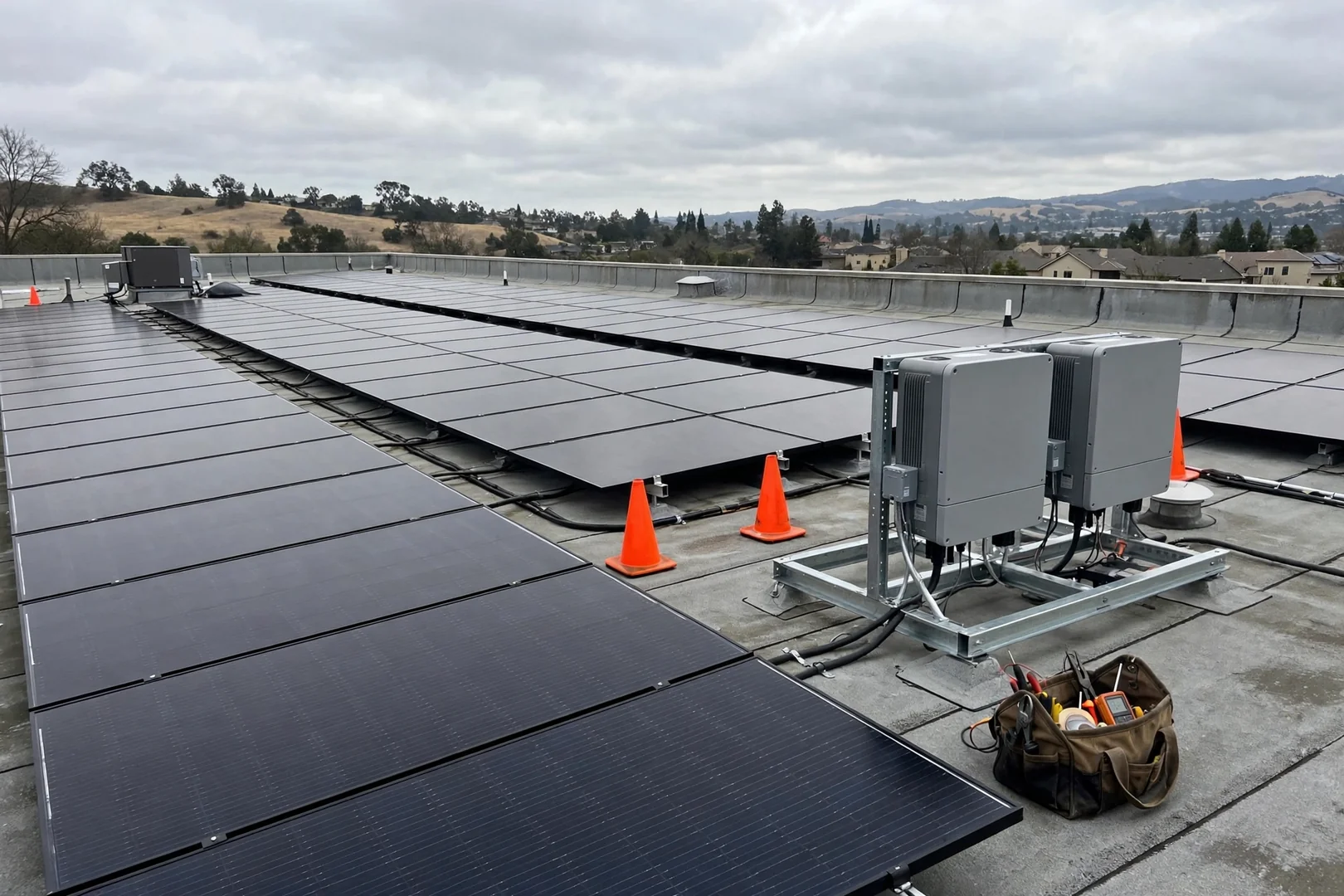
Homes, small commercial buildings, and multi-unit properties around Mountain House each present different structural and electrical conditions, from attached-garage service panels to flat commercial roofs with long DC runs. Our 2026 approach leans on pre-visit production data review so the failing component is identified before ladders and lift equipment come out, which limits roof traffic and reduces the chance of penetration damage or damaged flashing. Trained technicians follow lockout procedures, use insulated tools rated for DC voltage, and keep work zones clear of foot traffic during commissioning. Because Mountain House summers push ambient temperatures high, we also review mounting location, clearance, and heat exposure so the replacement unit is not set up to fail early. You receive a written scope, a commissioning report, and a post-job walkthrough explaining the new monitoring dashboard.

Talk With a Technician (209) 684-7590

How Much Does Solar Inverter Replacement Cost in Mountain House?

Solar inverter installation and replacement pricing in Mountain House depends primarily on inverter type and rated capacity, the condition of existing DC and AC wiring, and whether the system needs rapid-shutdown or interconnection updates, with most 2026 projects landing inside typical local ranges for these categories. A like-for-like string inverter swap on a single-family home sits at the lower end, while converting an aging central inverter to a microinverter or hybrid platform involves module-level hardware and additional labor per panel. Panel-board capacity matters too. If the main service panel needs a new breaker, load-side tap, or busbar review, that becomes part of the estimate rather than a surprise later. Other factors include mounting location and access, since a garage-wall unit is far quicker to service than an inverter set on a second-story exterior or a flat commercial roof requiring fall protection and staging. Conduit rerouting, replacement DC disconnects, monitoring gateway hardware, and utility permitting or reinspection fees each carry their own line item. Warranty status also shifts the picture, because some Mountain House systems still have manufacturer coverage on the inverter itself, leaving only labor and materials to account for. We check that before quoting anything. Exact pricing always requires an on-site assessment, since production logs, wire gauge, roof condition, and existing grounding can only be verified in person. During that visit a technician reviews fault history, tests voltage under safe de-energized conditions, and confirms what code updates apply to your address in 2026. You then receive a free written estimate that separates equipment, labor, permitting, and any structural or electrical corrections, so nothing is bundled into a vague total. Questions about a line item are welcome before work is scheduled.
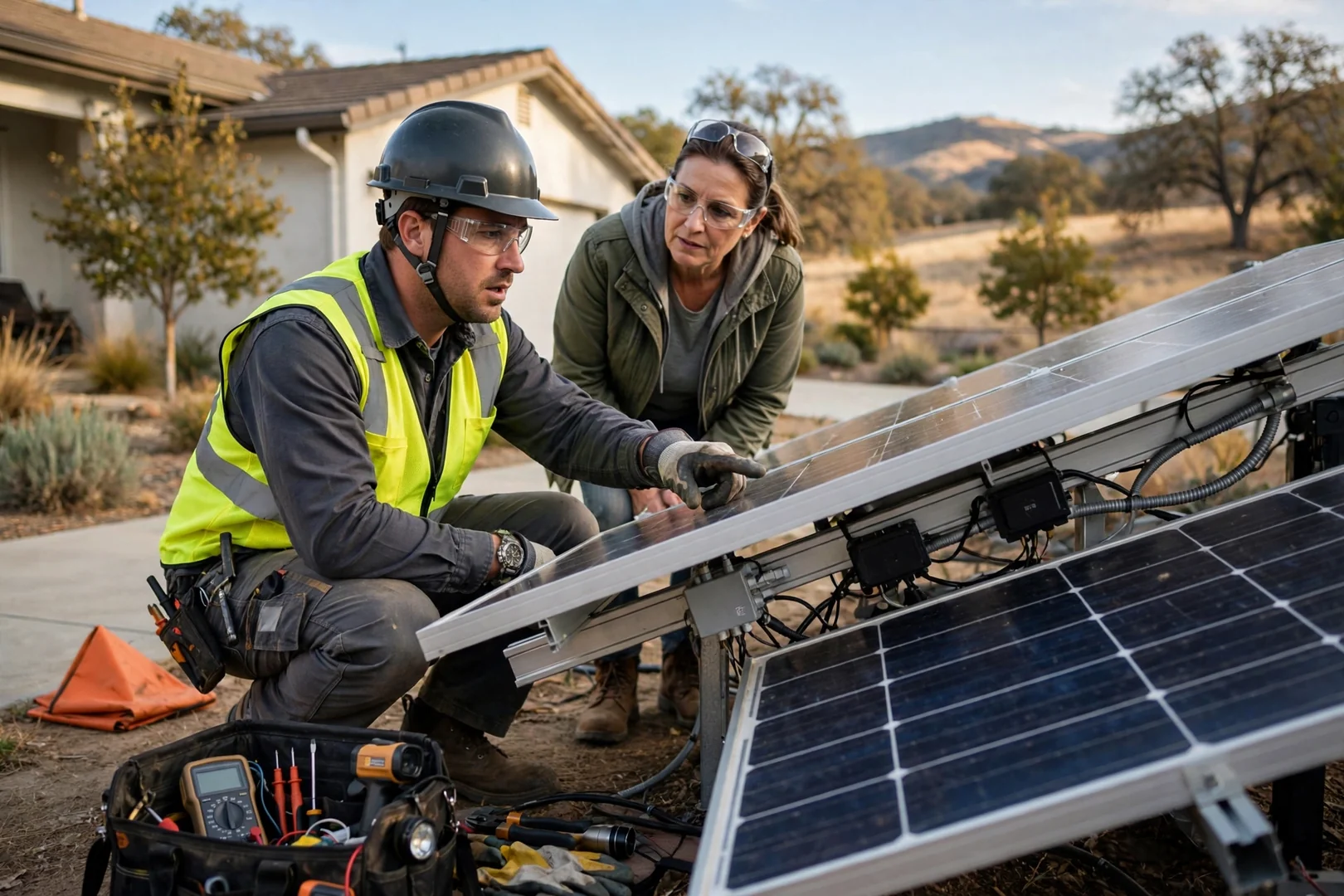
Solar technician reviewing inverter specifications and written estimate paperwork at a Mountain House home

- Common Solar Inverter Warning Signs -

What Signs Mean Your Property Needs Solar Inverter Replacement?

Failing inverters usually announce themselves through fault codes, unexplained production drops, or a dark monitoring app. Mountain House systems in 2026 often show overheating string inverters, nuisance ground-fault trips, and units aging past warranty. Replacement restores clean DC-to-AC conversion.

Click Me to Call: (209) 684-7590

Fault Codes and Frequent Shutdowns

Repeated ground-fault or arc-fault alerts, blinking status lights, and mid-afternoon shutdowns point to internal component wear rather than a shaded panel. Technicians verify the readings before recommending a replacement inverter.

Production Losses You Can Measure

When monitoring data shows a steady kilowatt-hour decline while panels stay clean and unshaded, the conversion stage is usually the weak link. Summer heat in Mountain House accelerates capacitor and fan degradation inside older units.

Aging Equipment and Discontinued Parts

Many inverters installed a decade ago are now past warranty with limited replacement parts available. Buzzing enclosures, hot housings, and scorched terminations are safety concerns that call for a planned swap, not a patch.

Our Inverter Service Process

How Do We Perform Solar Inverter Replacement in Mountain House?

Schedule an Assessment (209) 684-7590
1

System Review and Written Estimate

Work begins with a look at your monitoring history, panel string configuration, and existing inverter model. Homeowners receive a written estimate that explains compatible replacement options and expected output before anything is ordered.

2

Safe Shutdown and Lockout

The array is de-energized in sequence, starting at the AC disconnect and moving to the DC side, with lockout applied and voltage verified by meter. This step protects both the technician and your home wiring during removal.

3

Removal and Mounting Preparation

The old unit is detached, conduit is inspected for heat damage, and the mounting surface is checked for structural soundness. Clearances for airflow are confirmed so the new inverter runs cooler through Mountain House summers.

4

Installation and Termination Work

The replacement inverter is mounted, bonded, and wired with torque-checked terminations and correctly sized conductors. Insulation resistance and polarity checks follow before power is restored.

5

Commissioning and Walkthrough

Startup readings, string voltages, and monitoring connectivity are all verified against expected values for 2026 conditions. A post-job walkthrough covers the new display, warranty paperwork, and what to watch for going forward.

/// Recent Inverter Projects ///

Inverter Replacements Completed
Across Mountain House Properties

Inverter work across Mountain House in 2026 has covered newer tract homes, older ranch properties, garage-wall retrofits, and small commercial rooftops with mixed string and microinverter layouts.

Every job starts with a de-energized array, verified lockout at the AC disconnect, torque-checked DC terminations, and insulation resistance testing before commissioning. Conduit routing, mounting clearances, and ventilation are reviewed so heat and moisture stay off wall framing.

Trained technicians close out with monitoring setup and a written post-job walkthrough.

Call us on: (209) 684-7590

Why Do Mountain House Homeowners Trust Us for Inverter Work?

Call Us: (209) 684-7590
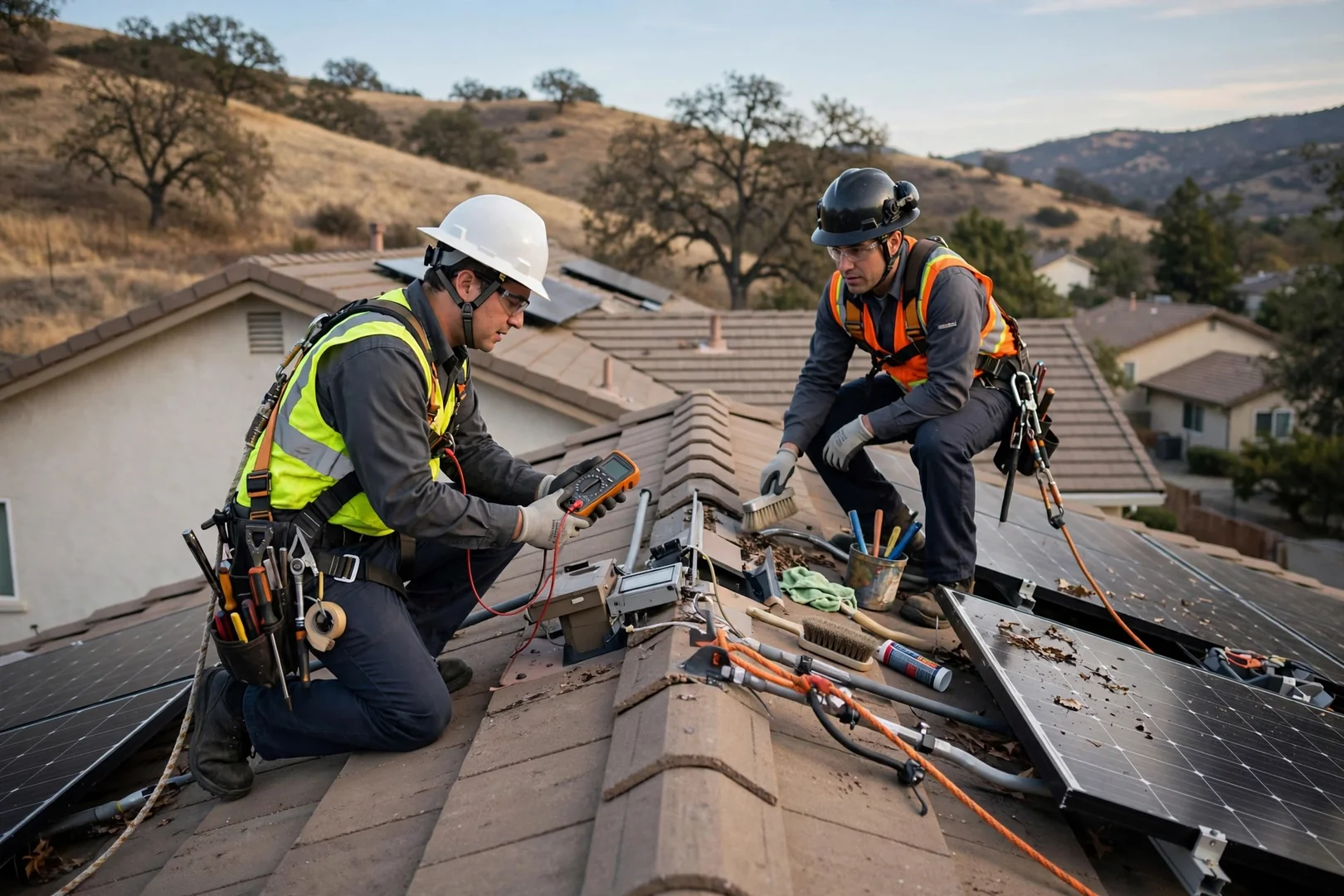
Technician safely testing a newly installed solar inverter at a Mountain House home

Focused Solar Inverter Installation and Replacement Advice. We match recommendations to your actual property conditions instead of using a one-size-fits-all package.

Clear Communication. You know what is being installed, why it matters, and how to maintain it after the visit.

Local Follow-Through. Our team supports homeowners and businesses in Mountain House, CA before, during, and after the job.

Inverter Questions Answered

Solar Inverter Installation and Replacement FAQs for Mountain House Homeowners

The questions below come up regularly from Mountain House customers planning an inverter installation or replacement in 2026, especially owners of older systems noticing lower production or error codes on their monitoring app. Each answer explains what happens during the work and why certain steps exist.

If your situation is not covered here, a phone conversation and a look at your monitoring history usually clarifies whether repair, replacement, or a full system evaluation makes the most sense. Written details follow every discussion so you can compare options without pressure.

Talk With Our Team

An inverter typically needs replacement when it is past its warranty period and showing repeat fault codes, internal capacitor failure, or a shutdown that returns after a reset, while isolated issues like a tripped DC disconnect or loose string connection are often repairable. We start by reading fault history from the monitoring portal and testing string voltage and insulation resistance at the array. That diagnostic step tells us whether the fault sits in the inverter itself or upstream in the wiring.

A standard inverter replacement includes safe system shutdown, removal of the failed unit, inspection of DC and AC conductors and conduit, mounting and wiring of the new inverter, grounding verification, commissioning, and setup of the monitoring connection. We also check that rapid shutdown components and disconnect labeling still meet current code expectations. You receive photo documentation and a walkthrough of the first production readings before we leave.

Most single-inverter replacements on a residential system are completed within one working day, though microinverter conversions and jobs requiring service panel changes can extend into a second visit. Scheduling depends on equipment availability, since certain string inverter models and matched batteries have longer lead times in 2026. We confirm the appointment window and any utility notification requirements in writing once the replacement unit is ordered.

Cost depends on the inverter type and capacity, whether you are staying with a string inverter or moving to microinverters or a hybrid battery-ready unit, and whether existing conduit, breakers, and mounting hardware can be reused. Because those variables change the labor and materials significantly, we provide a written estimate after inspecting the equipment rather than quoting a figure over the phone. The estimate separates equipment, labor, and any electrical upgrades so nothing appears as a surprise line item.

Heat is a real factor in Mountain House, and inverters mounted in direct afternoon sun or in tight, poorly ventilated spaces often derate their output and age faster than units placed in shaded, well-ventilated locations. During a replacement we review the existing mounting position, wall structure, and clearance requirements from the manufacturer before reinstalling in the same spot. Sometimes relocating the unit a few feet makes a measurable difference in summer performance and equipment lifespan.

Book Your Inverter Assessment

Schedule Solar Inverter Installation and Replacement in Mountain House

Wondering whether your inverter needs a repair or a full replacement? Our technicians start with a load and output review, check fault codes and DC disconnect wiring, then explain what the readings actually mean for your system. You receive a free written estimate that lists equipment options, string configuration notes, and any permitting steps required in Mountain House.

Scheduling is straightforward, and there is no obligation to move forward after the assessment. Many Mountain House homeowners are planning inverter upgrades in 2026 as older units reach the end of their service life, so booking early keeps your production steady through the sunniest months. Every appointment follows lockout procedures and a post-job walkthrough so you know the array was left safe and properly labeled. Call or email to reserve your visit.

Request Your Free Estimate (209) 684-7590
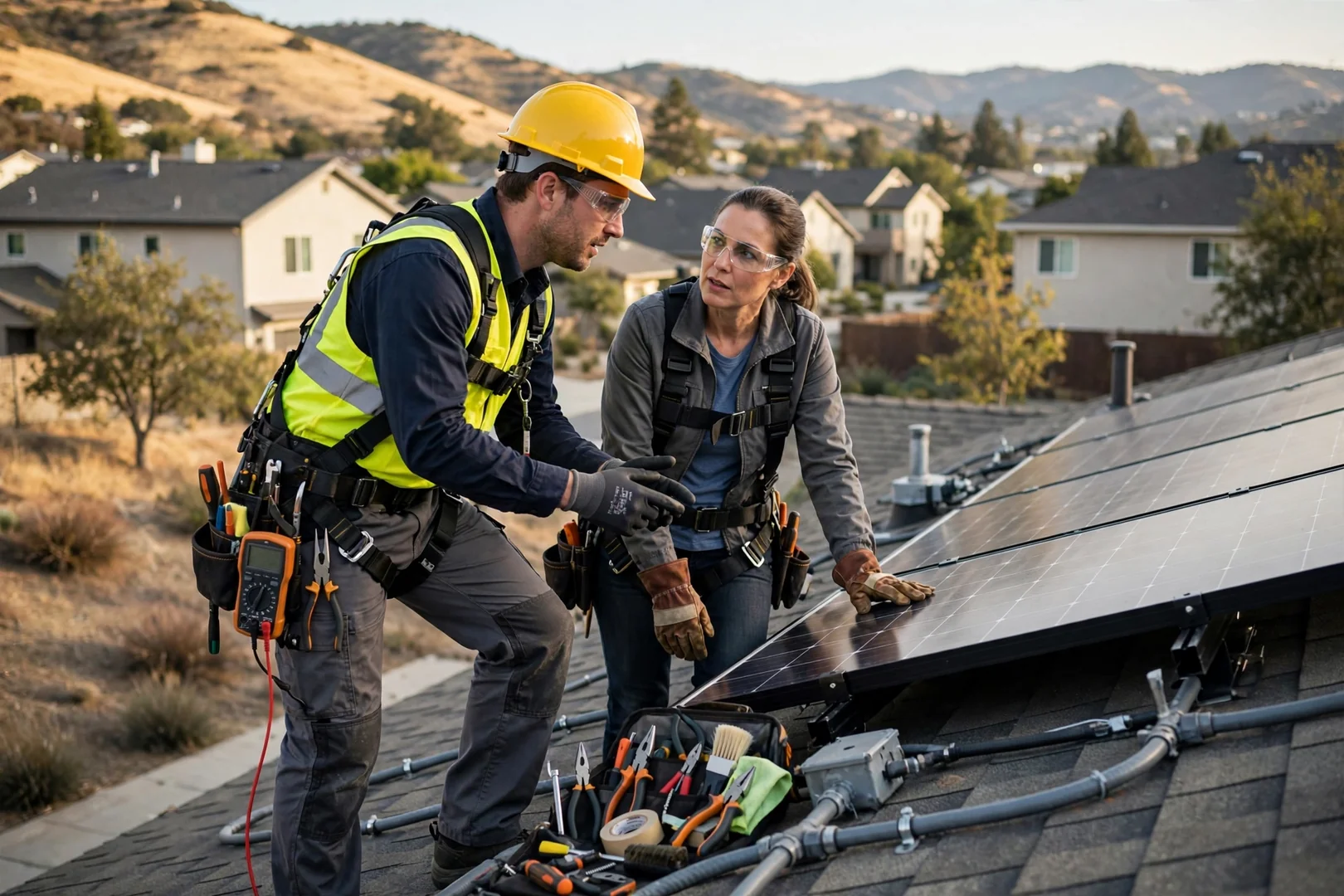
Technician reviewing solar inverter output readings on a Mountain House home
Call Us: (209) 684-7590