Solar Repair and Maintenance in Mountain House, CA

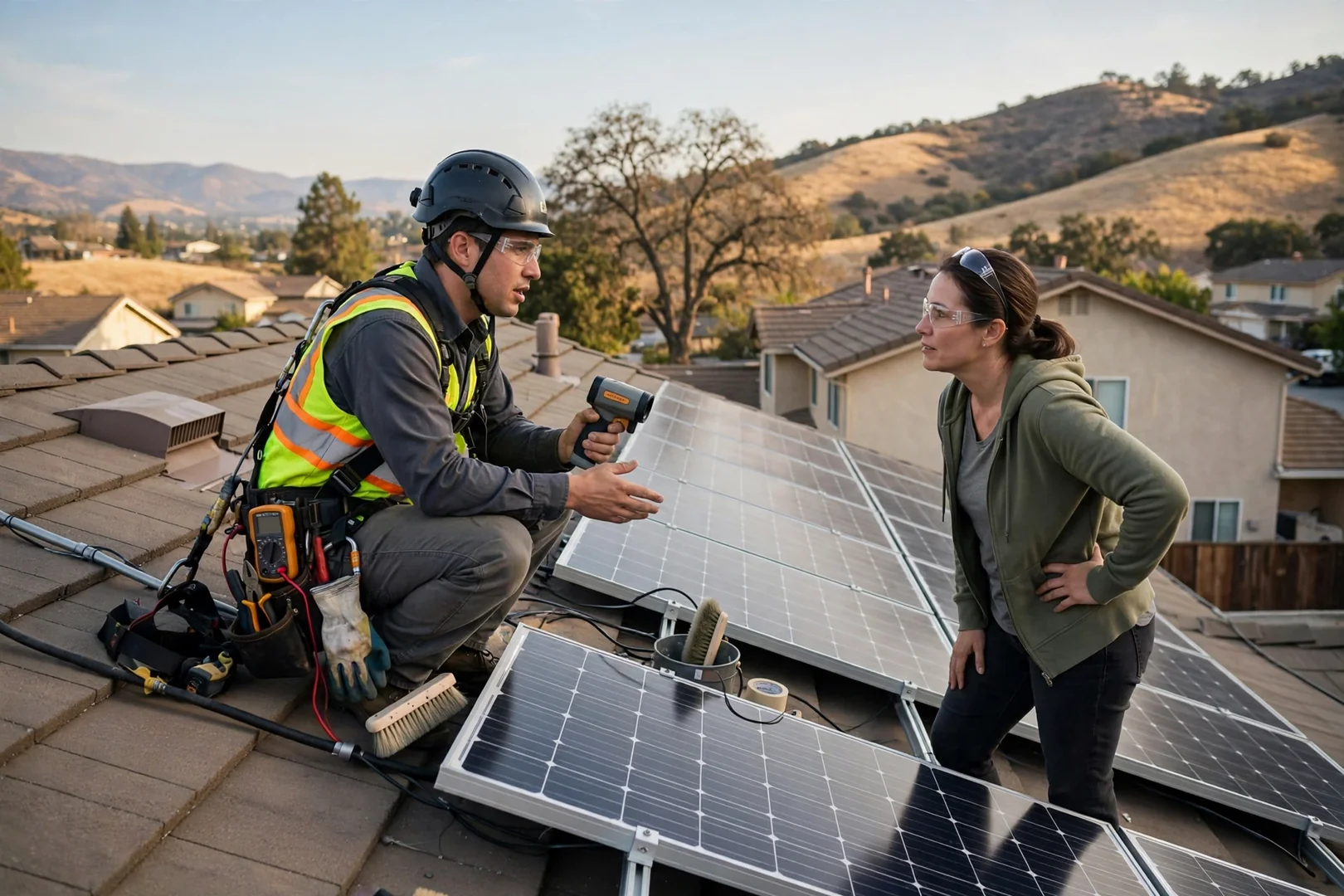
Solar repair and maintenance covers the inspection, cleaning, testing, and correction of an existing photovoltaic system, and it matters most for Mountain House homeowners whose rooftop arrays have been producing power for several years without a professional review. Many newer neighborhoods here sit under open sky with steady summer heat and Delta wind that carries fine dust onto module glass, which gradually reduces output and hides small issues like microcracks or loose racking hardware. Our trained technicians check inverter fault codes, measure string voltage, and verify grounding and conduit connections before recommending any repair. Nothing gets guessed at. Mountain House Solar Panel Installations schedules 2026 maintenance visits around spring pollen season and pre-summer peak production, so your system is reviewed before the months when you rely on it most, with safe roof access practices and written findings after every visit.

Request a System Checkup (209) 684-7590

Schedule a Solar Inspection

Share a few details about your system and location, and our team will follow up with a written estimate and available visit times.

Solar Repair and Maintenance Explained

What Our Solar Repair and Maintenance Service Includes

Solar repair and maintenance is the process of inspecting, testing, cleaning, and repairing the parts of a photovoltaic system so it keeps producing safely and at expected output, and at Mountain House Solar Panel Installations it includes module washing, inverter diagnostics, wiring and connector repair, racking and flashing checks, and monitoring review across Mountain House properties. Visits follow a set sequence: we review production data and inverter fault history first, then perform a visual roof survey, then take electrical readings such as string voltage, insulation resistance, and current per circuit. Findings are documented, not assumed.

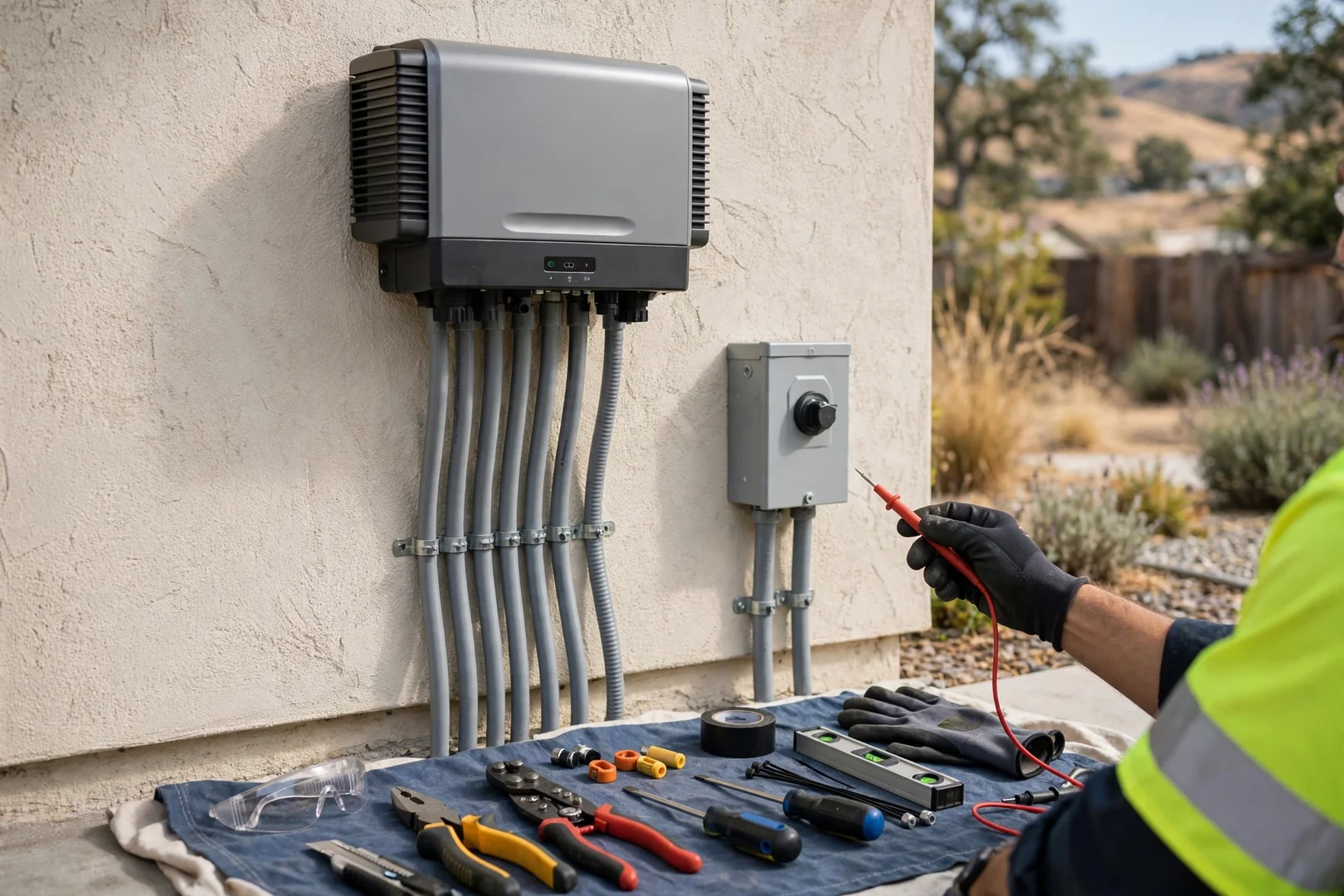
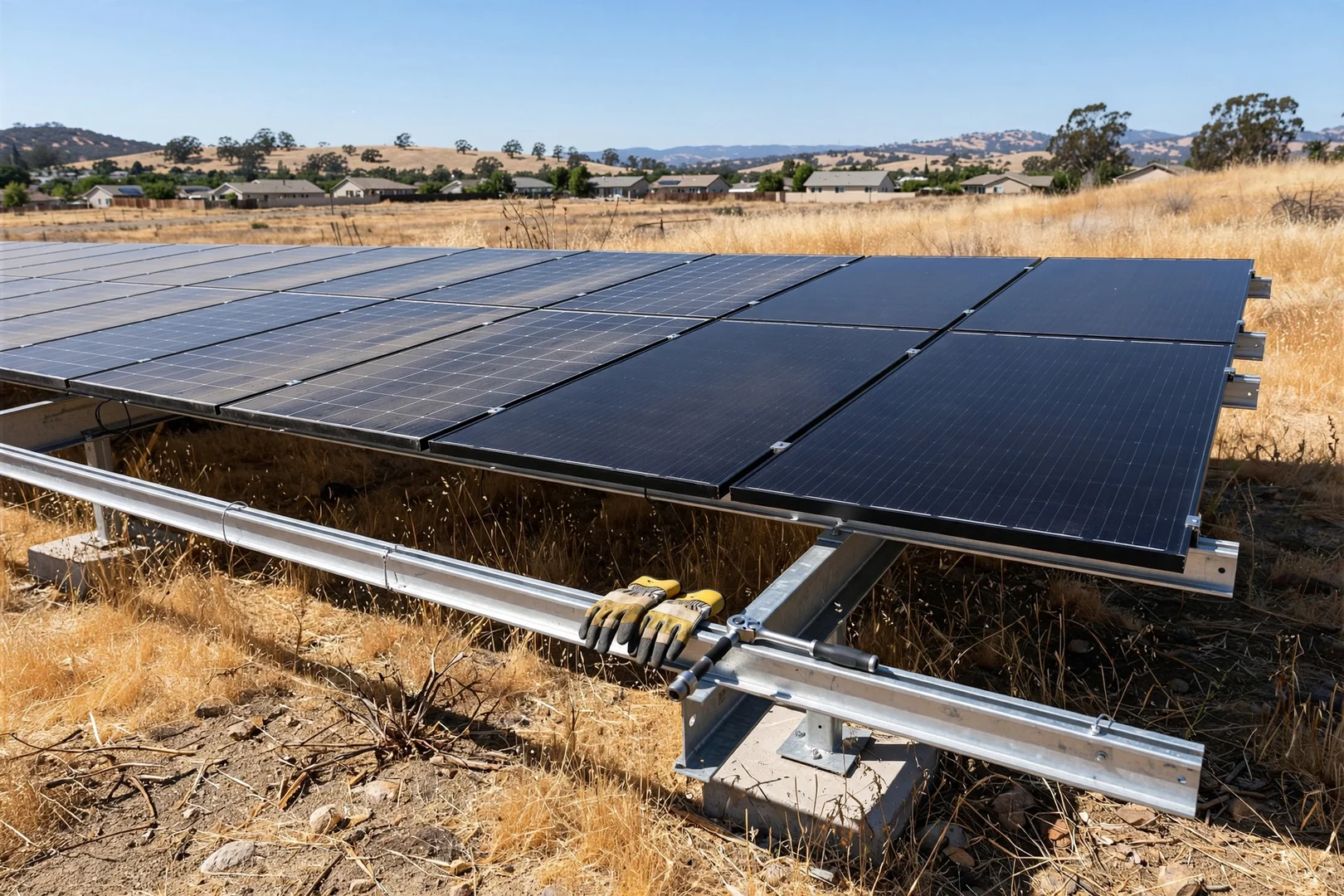
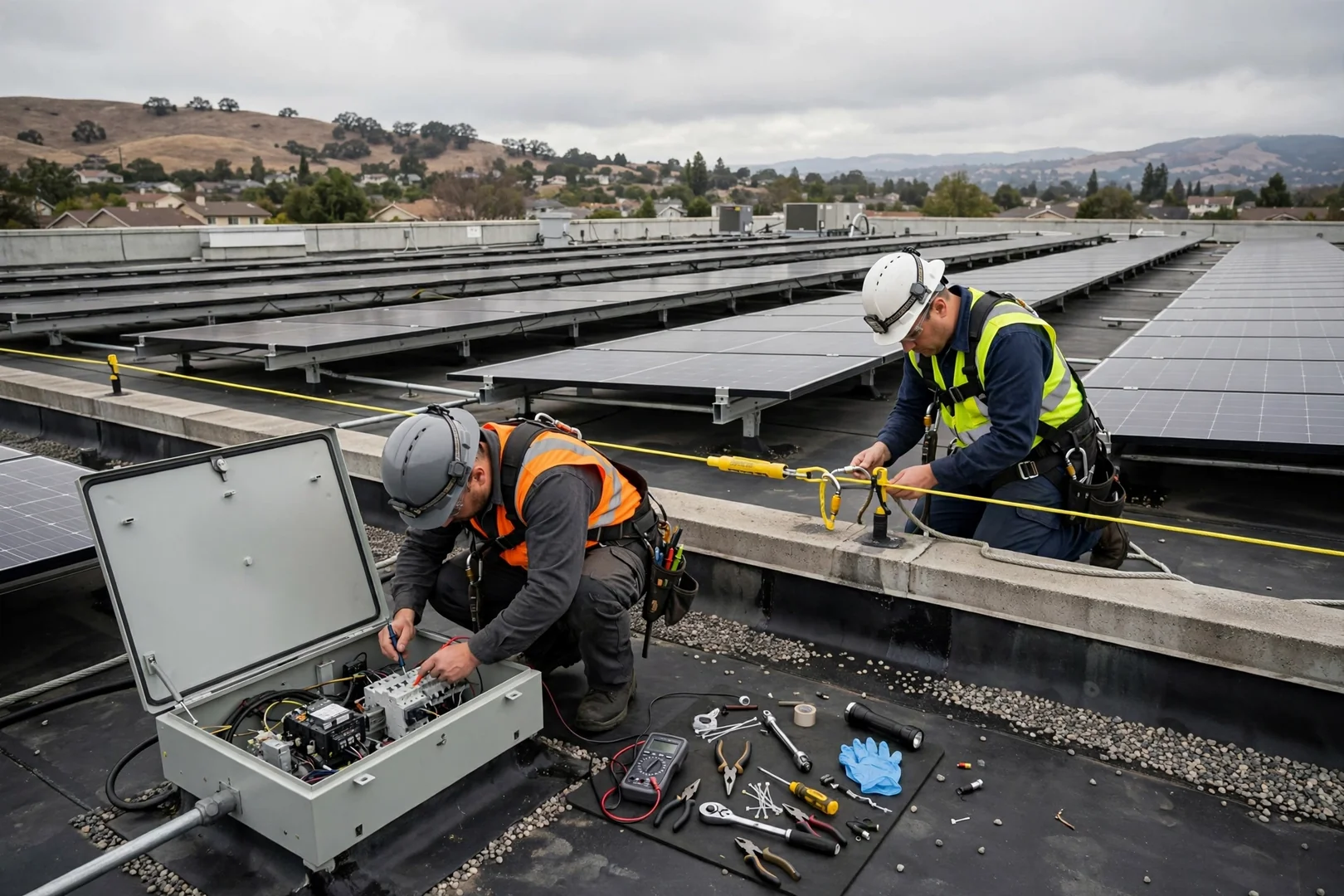
Work covers single-family homes, townhomes and multi-unit buildings, and commercial rooftops or ground-mounted arrays where row spacing and vegetation growth create their own issues. Technicians use fall protection, non-conductive tools, and proper lockout steps before opening any combiner box or disconnect, because DC circuits stay live in daylight and careless handling risks arc faults and roof damage. Our 2026 maintenance approach leans on preventative timing, with cleaning and torque checks before the hot high-production months and drainage and seal inspections ahead of winter rain. Every visit ends with a walkthrough and a written summary of condition, repairs completed, and anything worth watching.

Book a Maintenance Visit (209) 684-7590

How Much Does Solar Repair and Maintenance Cost in Mountain House?

Solar repair and maintenance pricing in Mountain House depends primarily on system size in kilowatts, roof height and pitch, the type of fault involved, and whether the visit is a scheduled tune-up or a diagnostic repair call, with most 2026 jobs priced by scope after an on-site review. A straightforward panel cleaning and torque check on a low-slope single-story roof sits at the lighter end of the range. Costs rise when work involves inverter board replacement, microinverter swaps, rodent-damaged DC wiring, or reflashing around mounts where water intrusion has started. Several specific factors shape the final number: module count and array layout, string configuration and the number of circuits needing testing, access difficulty and the fall protection setup required, replacement part pricing for inverters, optimizers, connectors, or racking hardware, and whether monitoring equipment needs recommissioning afterward. Ground-mounted arrays around Mountain House often need vegetation clearing and frame inspection, which adds labor. Commercial and multi-unit systems usually require more testing time because there are more strings and combiner points to verify. Panel age matters too, since older equipment can have discontinued parts. Because no two Mountain House rooftops are identical, exact pricing is set only after a site assessment where our technicians confirm equipment models, measure readings, and note any structural or electrical concerns. That step also protects you from paying for repairs a system does not need. Estimates are free and provided in writing, itemizing labor, parts, and any follow-up maintenance we suggest for later in 2026.
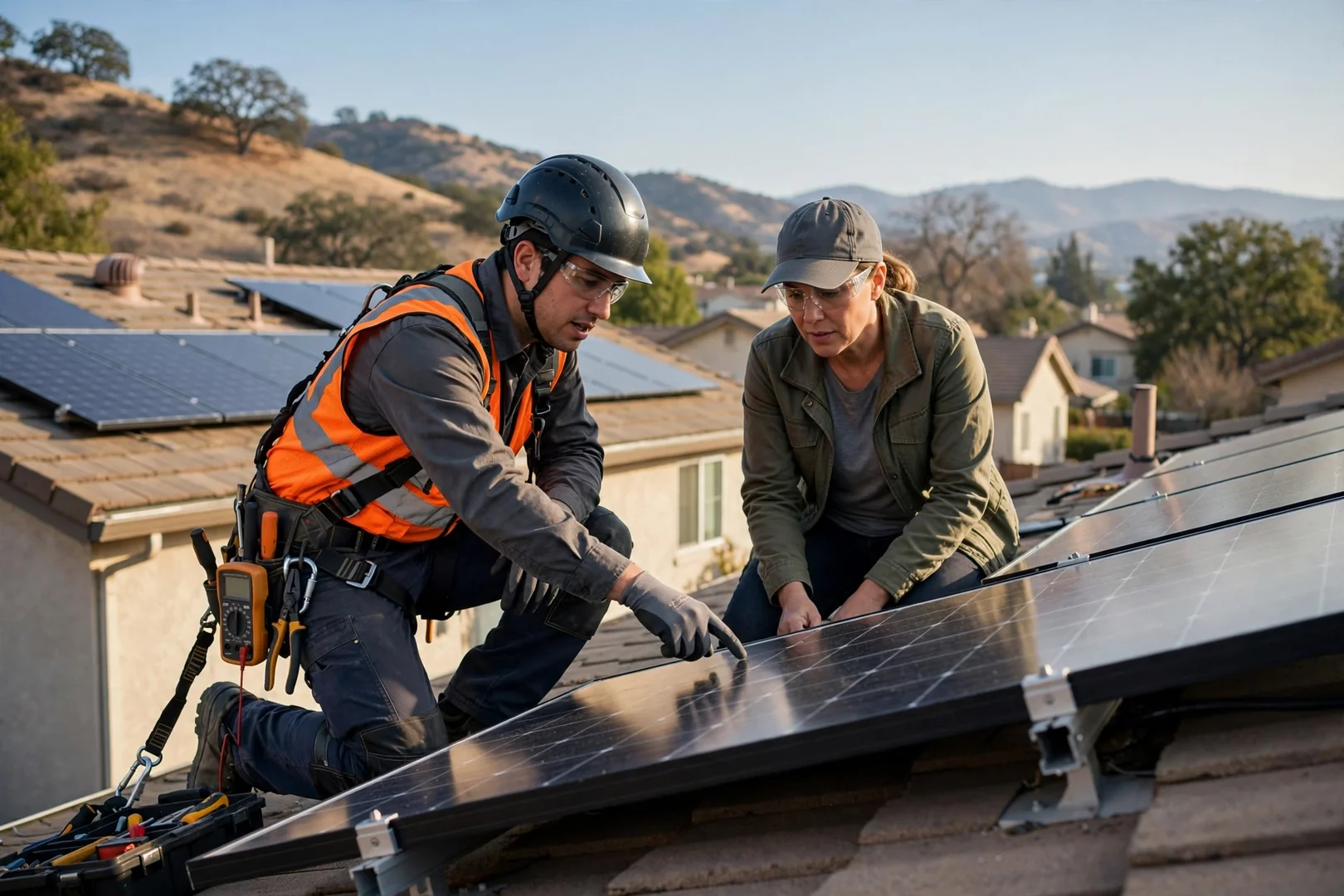
Homeowner reviewing a written solar maintenance estimate with a technician beside a Mountain House rooftop array

- Signs You Need Solar Maintenance -

What Signs Mean Your Property Needs Solar Repair and Maintenance?

Falling energy production, inverter fault codes, and visible panel damage are the clearest signs a system needs repair and maintenance. Delta breeze dust, microcracks, and loose MC4 connectors all reduce output. Mountain House homes see this most after dry 2026 summers. Scheduled service restores lost yield safely.

Click Me to Call: (209) 684-7590

Dropping Output on Your Monitoring App

When daily kilowatt-hour totals slide well below past months, the cause is often soiling buildup, a failing optimizer, or a string that has dropped offline. Trained technicians compare string-level data against irradiance readings before touching hardware, so the repair targets the real fault rather than guessing at panels that are working fine.

Inverter Fault Codes and Nuisance Shutdowns

Repeated ground-fault alerts, arc-fault trips, or overheating warnings usually point to moisture intrusion, degraded DC wiring insulation, or blocked ventilation around the inverter housing. These conditions carry real shock and fire risk, so diagnostics follow lockout procedures and voltage verification before any enclosure is opened.

Physical Damage, Soiling, and Wildlife Nesting

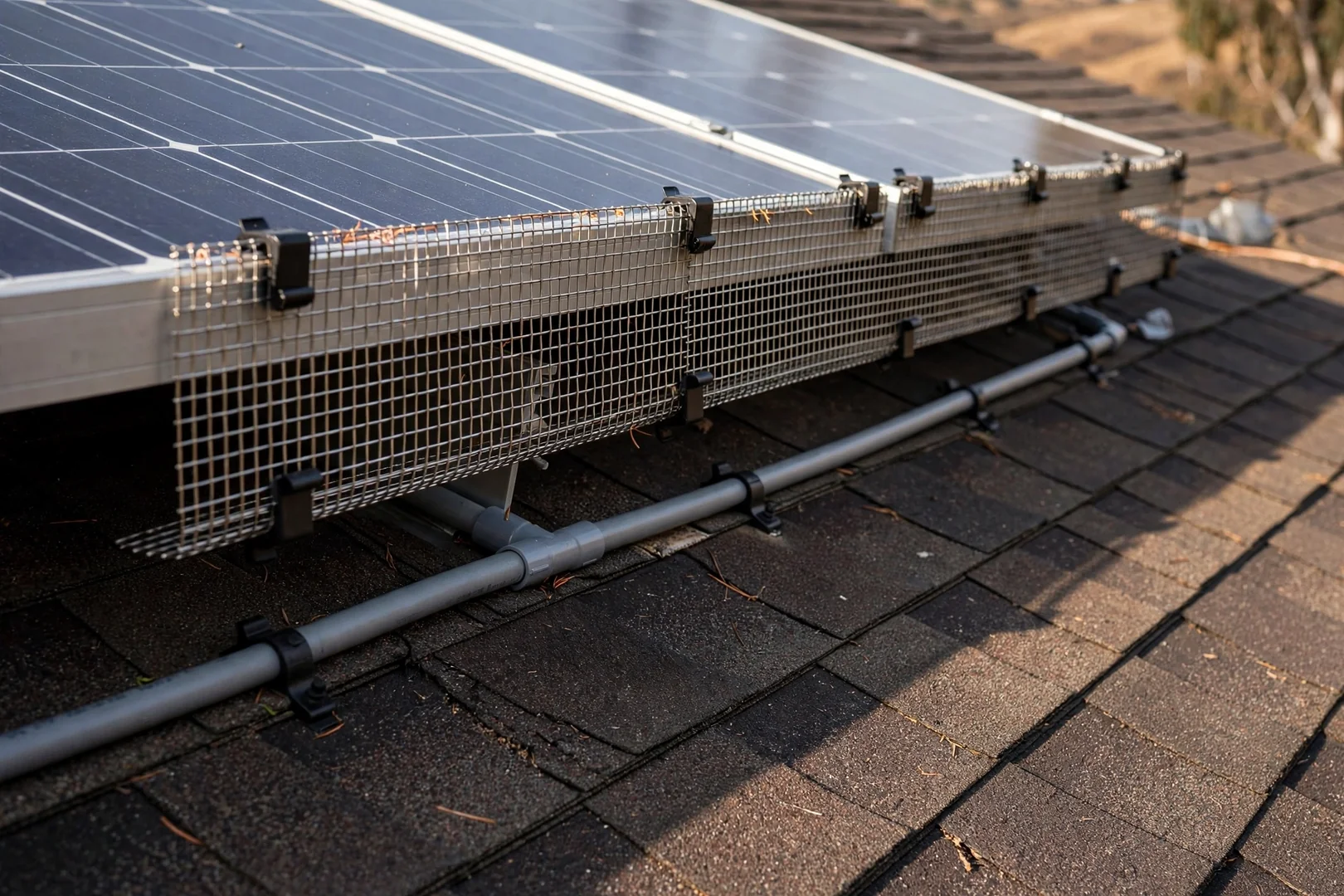
Hairline microcracks, delaminated backsheets, hot spots, and pigeon nesting under the array all appear across Mountain House rooftops. Dust films left by long dry stretches cut light transmission, while nesting debris traps heat and chews conduit. Careful roof-safe inspection identifies which panels need cleaning, resealing, or replacement.

Solar Maintenance Process

How Do We Perform Solar Repair and Maintenance in Mountain House?

Schedule Your Service Visit (209) 684-7590
1

Production Review and Written Assessment

Every visit starts with monitoring data, utility bills, and string-level production history so patterns are understood before anyone climbs a ladder. Homeowners receive a written assessment describing what the numbers suggest and which components deserve a closer look.

2

Safe Access and De-Energizing

Roof access is set up with anchored ladders, fall protection, and pathway planning that avoids stressing tiles or shingles. DC and AC disconnects are opened, circuits are verified dead with a meter, and lockout steps stay in place for the duration of hands-on work.

3

Component Inspection and Diagnostics

Technicians check racking bolts, flashing seals, grounding continuity, MC4 connectors, and junction boxes for corrosion or arcing signs. Thermal scanning and clamp meter readings help locate hot spots, bypass diode failures, and underperforming strings without needless panel removal.

4

Repairs, Cleaning, and Part Replacement

Findings drive the fix list: resealing penetrations, torquing racking hardware, replacing failed optimizers or inverters, and clearing soiling with deionized water and soft brushes. Damaged modules are swapped with electrically matched replacements so string voltage stays balanced.

5

Re-Energizing, Testing, and Walkthrough

Systems are brought back online in sequence while insulation resistance, polarity, and output are verified against expected values. A post-job walkthrough covers what changed, what to watch on the monitoring app, and when the next inspection makes sense.

/// Recent Solar Service Jobs ///

Solar Repair and Maintenance
Completed Across Mountain House

Service calls across Mountain House in 2026 have ranged from single-panel swaps on tract-home rooftops to full array tune-ups on ground mounts and small commercial buildings. Dust films, worn racking hardware, corroded lugs, and aging inverters make up most of what technicians find, and each condition is confirmed with thermal imaging and meter readings before parts are ordered.

Every job begins the same way. Access is planned, fall protection is anchored, and circuits are de-energized and verified before hands touch hardware, which keeps both crews and roofing materials protected. Homeowners receive written findings and a post-job walkthrough covering what changed and what to watch.

Call us on: (209) 684-7590

Why Do Mountain House Homeowners Trust Us for Solar Repair and Maintenance?

Call Us: (209) 684-7590
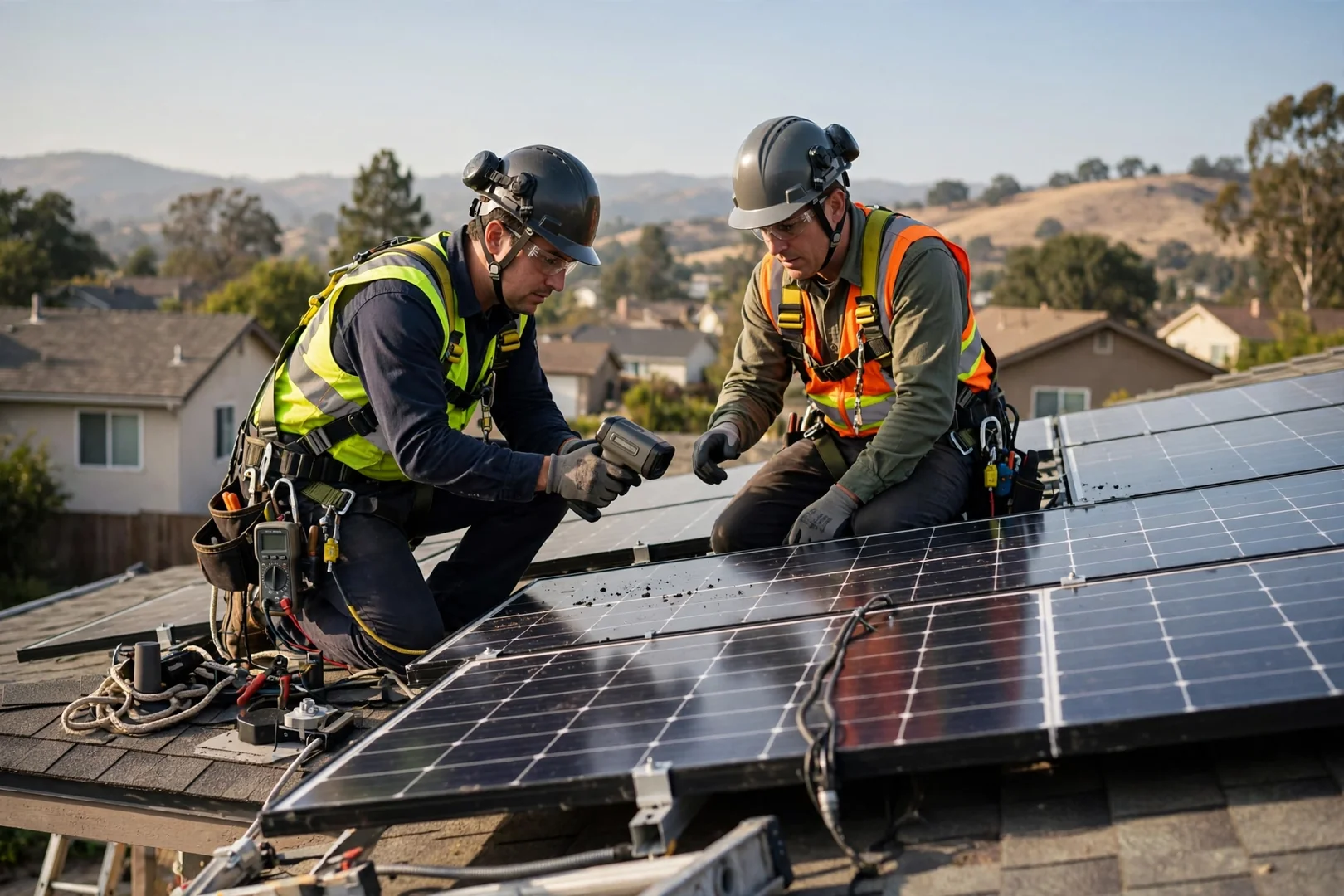
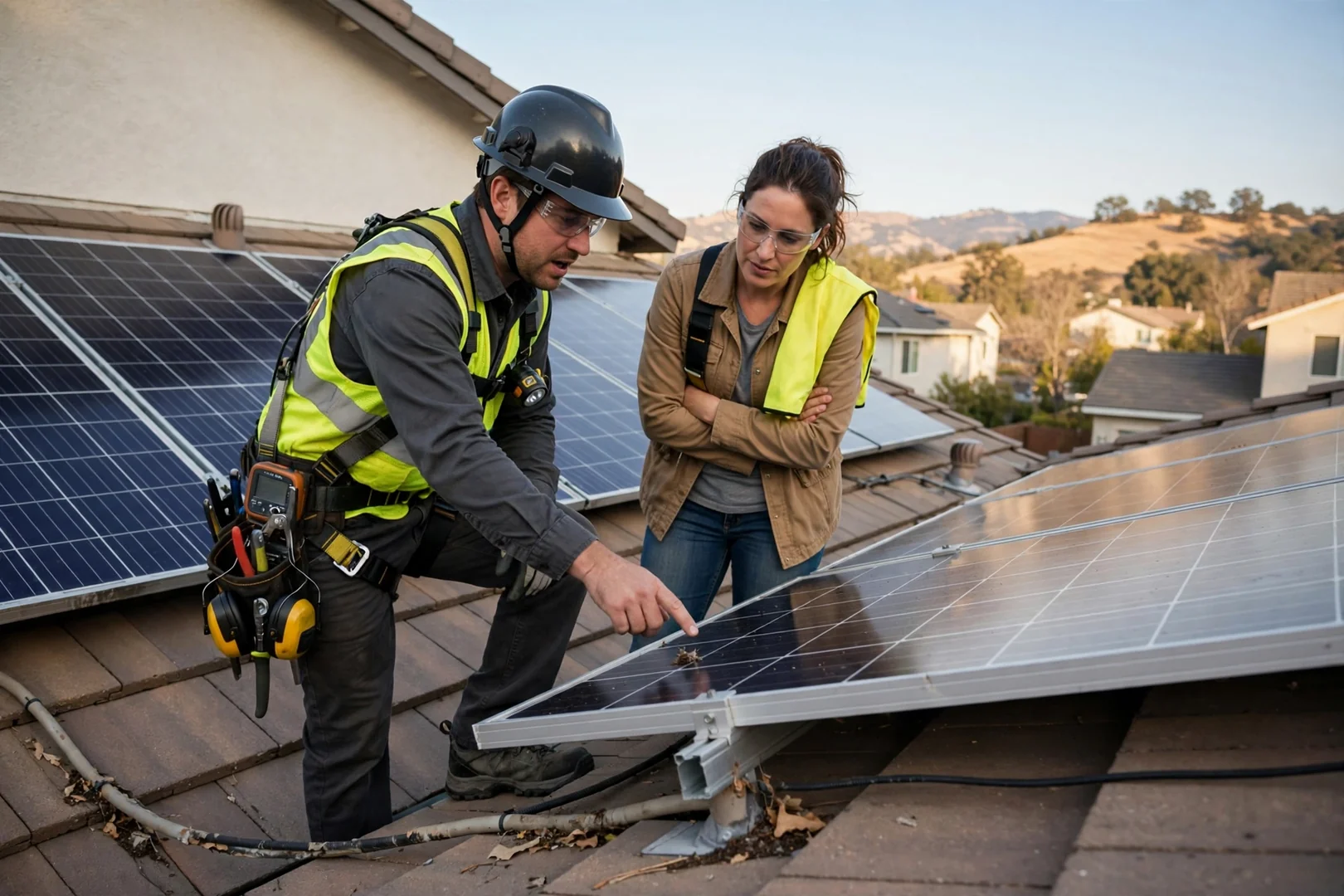
Technician inspecting rooftop solar array wiring and mounting hardware on a Mountain House home

Focused Solar Repair and Maintenance Advice. We match recommendations to your actual property conditions instead of using a one-size-fits-all package.

Clear Communication. You know what is being installed, why it matters, and how to maintain it after the visit.

Local Follow-Through. Our team supports homeowners and businesses in Mountain House, CA before, during, and after the job.

Solar Maintenance Questions

Solar Repair and Maintenance FAQs for Mountain House Homeowners

Questions about upkeep come up often once a system has been producing for a few years. The answers below cover the topics Mountain House customers ask most in 2026, from scheduling and site preparation to what a maintenance visit actually includes.

If your situation involves something more specific, such as repeated inverter faults or roof work planned alongside panel service, a phone conversation usually sorts it out faster than reading. Call (209) 684-7590 and we can walk through the details.

Ask Us About Your System

Most Mountain House systems benefit from a professional inspection once or twice a year, with cleaning timed after the long dry stretch when valley dust and pollen build a soiling layer across the glass. Technicians check module clamps, rail attachments, and conduit straps during the same visit so structural issues are found while the crew is already safely anchored on the roof. Systems near open fields or construction activity often need cleaning more frequently because airborne grit settles unevenly on the lower panel edges.

A standard maintenance visit includes a visual module survey for microcracks and delamination, torque verification on mounting hardware, inspection of MC4 connectors and wire management, an inverter fault log review, and a string-level production comparison against expected output. Findings are photographed and summarized in writing, and the technician reviews them with you before leaving. Any repair beyond the inspection scope, such as replacing a failed optimizer or resealing a roof penetration, is quoted in a written estimate first.

Preparation is minimal, though clearing driveway space for the ladder truck and unlocking access to the main service panel, inverter, and any side gates helps the visit stay on schedule. Pets should be kept indoors while ladders are staged and roof anchors are set, since crew movement around the perimeter creates temporary hazards below. If you have monitoring app access, having your login handy lets the technician compare recorded production data against on-site meter readings.

Cost depends on roof pitch and access difficulty, system size, whether the work is a scheduled inspection or a diagnostic repair, and which components need replacement. Diagnostic repairs involving inverter boards, bypass diode failures, or damaged conductors take longer than routine cleaning and hardware checks because testing must isolate the fault before parts are ordered. Every job is priced in a written estimate after the assessment, so you see the breakdown before any work starts.

Local conditions do put measurable stress on arrays, mainly through summer heat that accelerates connector and sealant aging, winter tule fog moisture that promotes corrosion at junction boxes, and delta winds that work mounting hardware loose over the years. Thermal cycling between hot afternoons and cool nights is a common reason older systems develop resistive connections that show up as reduced string output. Regular inspections in 2026 focus on those wear points, since catching a degraded connector early avoids both production loss and heat-related risk at the roof surface.

Book Solar Repair and Maintenance

Schedule Solar Repair and Maintenance in Mountain House

Wondering whether your array needs attention this season? A technician can inspect panel surfaces, check inverter output readings, test wiring connections, and review mounting hardware for looseness before small issues turn into production losses. Every visit ends with a free written estimate that spells out findings and recommended work, so you can compare options without any obligation to move forward. Scheduling is straightforward, and Mountain House homeowners planning maintenance for 2026 can pick a window that fits their week.

Safety guides how each inspection is handled, from roof anchoring and fall protection to shutting down DC circuits before any panel is touched. Nothing gets rushed. Our team documents system readings, explains what the numbers mean in plain terms, and walks the property with you once the work is finished. Call or email today to reserve your maintenance visit.

Request Your Free Estimate (209) 684-7590
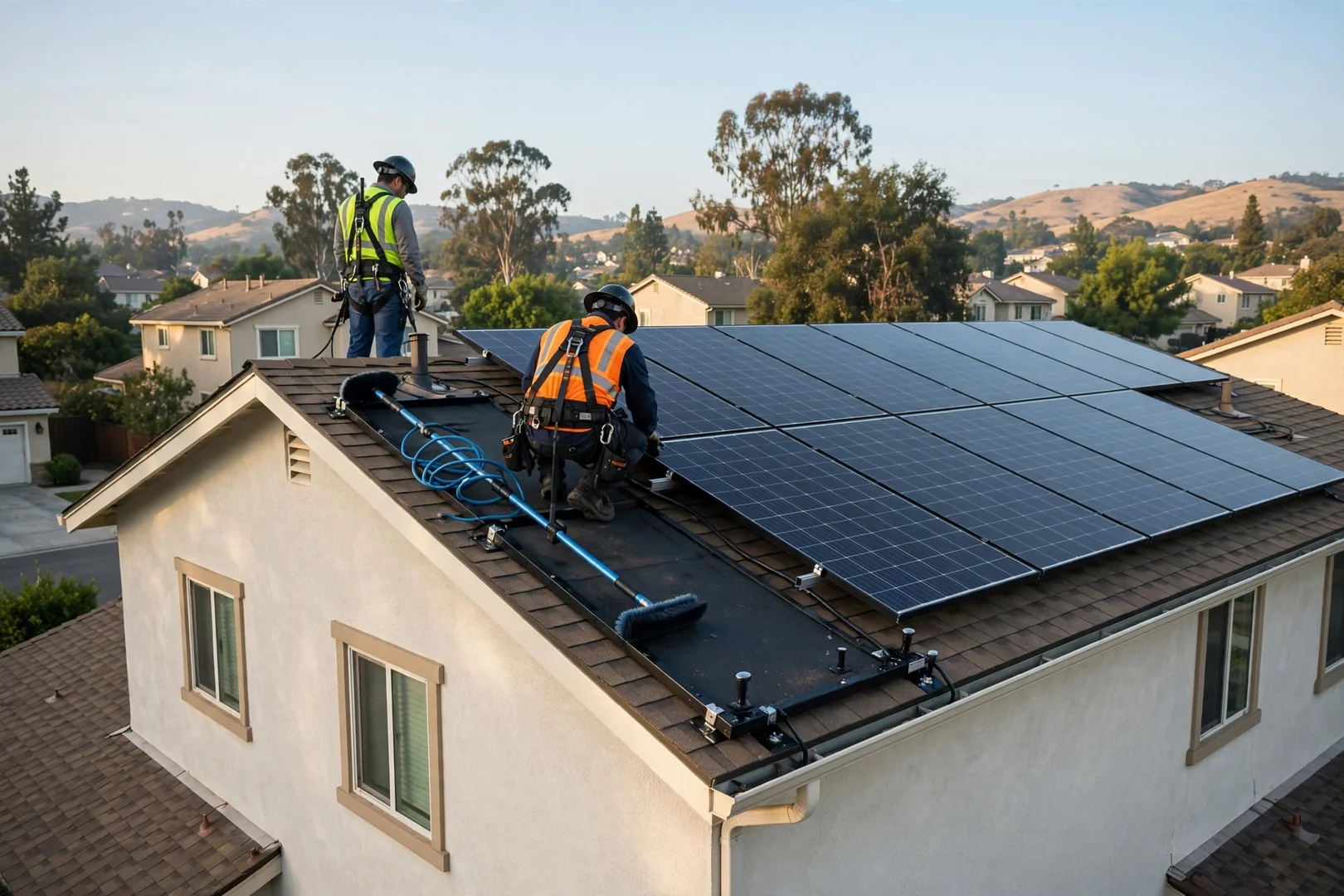
Solar technician reviewing rooftop panel readings at a Mountain House home
Call Us: (209) 684-7590